


Periodontal disease doesn't start as loose teeth or dramatic gum loss. It usually begins with gingivitis, where the gums are inflamed but the deeper support structures are still intact. The different stages of periodontal disease matter because each stage changes what you're likely to notice, what your dentist can measure, and how aggressive treatment needs to be. A little bleeding after brushing may point to a reversible problem, while gum recession, deeper periodontal pockets, bone loss, and tooth mobility suggest periodontitis that won't resolve with home care alone. In this guide, you'll see how the condition progresses from gingivitis to advanced periodontitis, how dentists confirm the stage, and what treatment usually fits each level of severity.
What Periodontal Disease is and How it Progresses
Periodontal disease is an inflammatory condition that starts in the gums and, if it progresses, damages the tissues and bone that hold teeth in place. Plaque is the soft bacterial biofilm that builds along the gumline. When it hardens into tartar, it becomes harder to remove and keeps bacteria against the gums.
The key difference is depth. Gingivitis affects only the gums and can often be reversed with dental cleaning and consistent oral hygiene. Periodontitis means inflammation has moved deeper, forming periodontal pockets around the tooth root and causing clinical attachment loss or bone loss.
| Stage | Typical clues | What dentists look for | Usual treatment direction |
|---|---|---|---|
| Gingivitis | Bleeding, redness, swelling | No bone loss | Cleaning and improved home care |
| Early periodontitis | Mild recession, persistent bleeding | Early attachment changes | Deep cleaning and monitoring |
| Moderate periodontitis | Deeper pockets, bad breath | Clear bone loss | Scaling and root planing, maintenance |
| Advanced periodontitis | Loose teeth, bite changes | Severe bone loss, furcation involvement | Specialist care, possible surgery |
If you're trying to describe bleeding, tenderness, or looseness clearly, a symptom timeline helps your dentist connect what you feel with findings such as pocket depth and gum recession. You'll get more from the visit when you can explain patterns, not just single moments, and describe symptoms clearly can make that conversation easier.
Stage 1: Gingivitis
Gingivitis is the earliest stage, where gums are inflamed but the bone and attachment around the teeth haven't been permanently damaged. The classic signs are bleeding gums during brushing or flossing, redness, puffiness, tenderness, and sometimes mild bad breath.
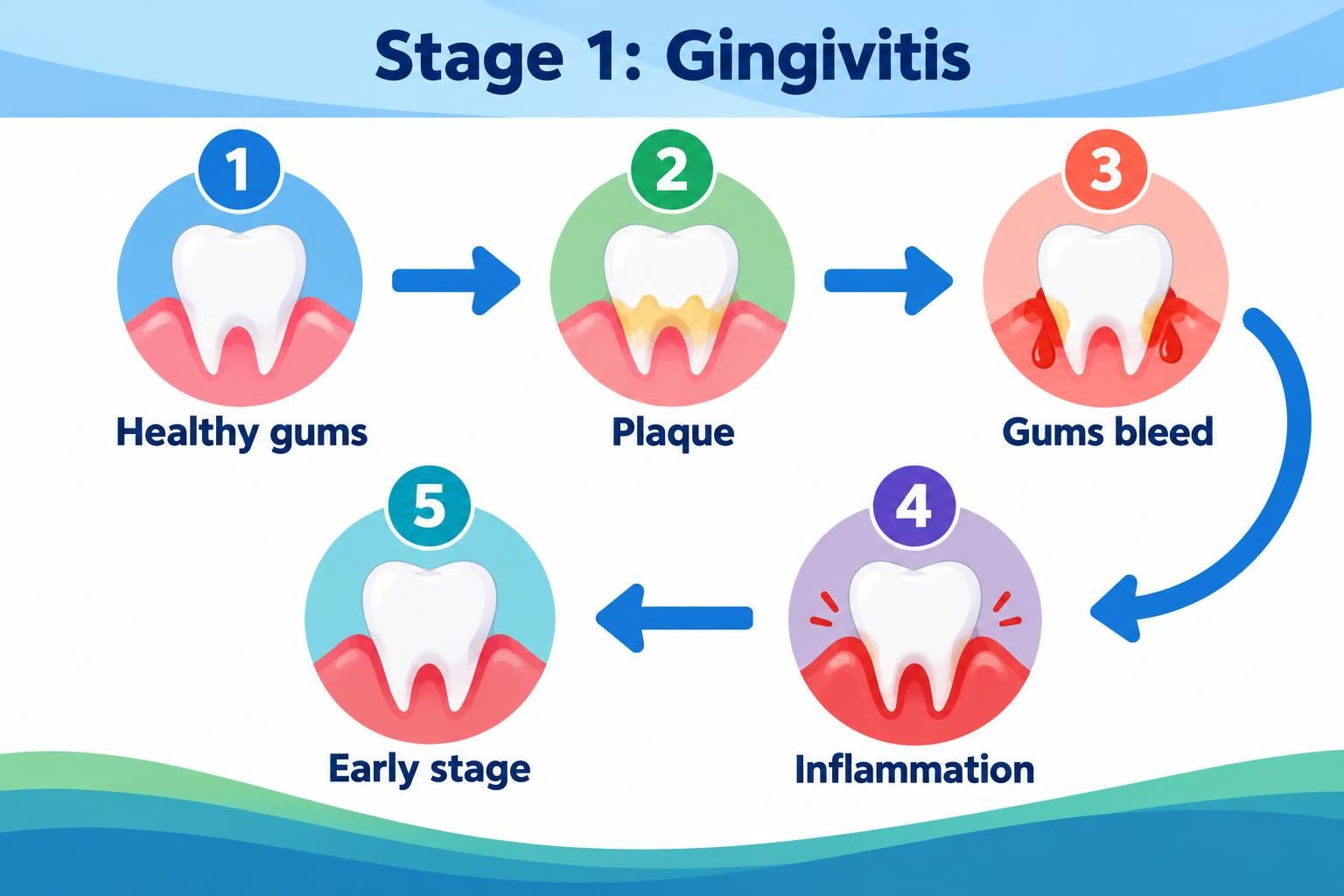
A person with bleeding gums and no bone loss may still be in gingivitis, especially if pocket measurements remain shallow and X-rays don't show support loss. That's the stage where better brushing technique, floss, an interdental brush, and a professional dental cleaning can make a real difference.
Gingivitis can be reversed because the deeper periodontal structures are still intact. But don't ignore it just because it's common. Bleeding is a warning sign that plaque and bacteria are irritating the gumline. If it keeps happening after you've improved home care for a couple of weeks, it's time for an exam rather than guessing.
Stage 2: Early Periodontitis
Early periodontitis is the point where inflammation has started to damage the attachment between the gums, tooth root, and supporting bone. Symptoms can still look mild, which is why people sometimes underestimate it.
You may notice gums that bleed easily, bad breath that returns quickly, slight gum recession, or tenderness around certain teeth. A dentist may find deeper periodontal pockets than expected, early clinical attachment loss, or small areas of bone change on dental X-rays. This is where numbers matter, and understanding basic health measurements can help you follow why pocket depth and attachment changes guide treatment decisions; common health numbers is useful if medical or dental measurements often feel confusing.
At this stage, home care supports healing but usually isn't enough by itself. Scaling and root planing, often called deep cleaning, removes tartar and bacterial buildup below the gumline and smooths the root surface so the gums can reattach more predictably.

Stage 3: Moderate Periodontitis
Moderate periodontitis means the disease has caused more established attachment loss and bone loss, often with pockets that are harder to clean at home. This stage is more serious because the support around teeth is already compromised.
Symptoms may include gum recession that makes teeth look longer, increased sensitivity near exposed root surfaces, ongoing bad breath, bleeding, and occasional discomfort when chewing. A person with recession and deeper pocket measurements may be moving from early to moderate periodontitis, especially if dental X-rays show bone loss around several teeth.
Treatment usually becomes more structured here. Scaling and root planing may be done by sections of the mouth, and some cases need localized antibiotic therapy or antimicrobial rinses such as chlorhexidine for short-term bacterial control. But mouthwash doesn't rebuild receded gum tissue or replace professional cleaning. Maintenance visits also become more important because the pockets can recolonize with bacteria if care stops.
Stage 4: Advanced Periodontitis
Advanced periodontitis is severe gum disease with major loss of tooth support, often causing tooth mobility, bite changes, or visible shifting. At this stage, the problem isn't just inflamed gums; it's loss of the structures that keep teeth stable.
You may notice loose teeth, spaces opening between teeth, pus near the gumline, painful chewing, persistent bad breath, or gum recession that exposes more of the tooth root. A person with loose teeth, furcation involvement, and X-ray bone loss is likely dealing with advanced disease and needs prompt periodontal evaluation.
Furcation involvement means bone loss has reached the area where the roots of a multi-rooted tooth divide. That's a challenging area to clean and treat. Advanced cases may need periodontal surgery, gum grafting, bone grafting, tooth splinting, or extraction planning. The goal is to control infection, preserve teeth when possible, and create a maintenance plan that keeps the disease from progressing further.
How Dentists Diagnose the Stage
Dentists diagnose the stage of periodontal disease by combining what they see clinically with measurements of pocket depth, attachment loss, and bone support. Symptoms matter, but they don't tell the whole story.
During an exam, your dentist or hygienist uses periodontal probing to measure the space between the gum and tooth. Healthy or mildly inflamed gums have shallower measurements, while deeper pockets suggest the bacteria have moved below the gumline. They also check bleeding on probing, gum recession, tooth mobility, bite changes, and areas where the gum has pulled away from the tooth.
Diagnosis isn't about one number in isolation. A pocket can look deeper because of swollen gums, while recession can make the pocket seem less dramatic even when attachment has been lost. That's why preventive care conversations should include what was measured, what changed since your last visit, and what needs watching next; preventive care conversations can help you ask better questions without overcomplicating the appointment.
Common Exam Findings
Common exam findings include bleeding on probing, tartar below the gumline, gum recession, pocket depth changes, clinical attachment loss, and tooth mobility. Your dentist may also check whether the gums are tender, whether teeth have shifted, and whether chewing feels uneven.
These findings help separate gingivitis from periodontitis. Bleeding without bone loss may still be gingivitis. Bleeding plus recession, deeper pockets, and attachment loss points toward periodontitis.
Imaging and Measurements
Dental X-rays show bone levels around teeth and help confirm whether support has been lost. They can also reveal patterns of bone loss that aren't visible during a regular visual exam.
Measurements give the diagnosis structure. Pocket depth shows how deep the space is around the tooth, while clinical attachment loss estimates how much support has been lost over time. X-rays help confirm severity, especially when furcation involvement or advanced bone loss is suspected.
Treatment Options by Stage
Treatment depends on whether inflammation is limited to the gums or has already caused attachment and bone loss. Gingivitis usually improves with professional cleaning, plaque removal, and better daily oral hygiene.
Early periodontitis often requires scaling and root planing to clean below the gumline. Moderate periodontitis may need deeper instrumentation, maintenance visits, and sometimes antibiotics or antimicrobial therapy when bacterial control is needed. Advanced periodontitis may require a periodontist, especially with loose teeth, furcation involvement, defects that may benefit from bone grafting, or gum recession needing surgical evaluation.
The practical question is whether home care, deep cleaning, or surgery is the next step. If bleeding improves after cleaning and no bone loss is present, home care may be enough. If pockets stay deep or X-rays show bone loss, professional treatment becomes the foundation, not an optional extra. If you are unsure whether the plan fits the findings, seek another perspective can help before delaying necessary care.
Professional Care Vs. Home Care
Professional care removes tartar, bacteria, and infected buildup from places your toothbrush and floss can't reach. That's why scaling and root planing can help early or moderate periodontitis in ways home care can't.
Home care still matters every day. Use a toothbrush carefully along the gumline, clean between teeth with floss or an interdental brush, and use antimicrobial mouthwash only as directed. It supports treatment, but it doesn't reverse deep pockets or bone loss alone.
Prevention and When to Seek Help
The best prevention strategy is daily plaque control and dental care before gum inflammation becomes bone loss. Good oral hygiene, regular cleanings, and early attention to bleeding gums are the basics, but risk factors affect how closely you need monitoring.
Smoking, diabetes, pregnancy, stress, genetics, saliva changes, and poor oral hygiene can all influence gum health. Gum recession can happen at different ages, so age alone does not determine whether it is normal. Recession may appear as longer-looking teeth, exposed yellow root surface, notches near the gumline, or new sensitivity.
See a dentist if bleeding continues, bad breath does not improve, gums are receding, or your bite feels different. See a periodontist when pockets are deep, bone loss is visible, teeth are loose, furcation involvement exists, or surgery is being considered. You can live well with gum disease, but it requires control, monitoring, and maintenance instead of ignoring progression.
The stages of periodontal disease are easiest to understand as a progression: gingivitis affects the gums, early periodontitis starts attachment damage, moderate periodontitis shows clearer support loss, and advanced periodontitis threatens tooth stability. Match symptoms to measurable findings through a dental exam, especially with bleeding, recession, persistent bad breath, or loose teeth. Home care helps prevent and maintain health, but deeper pockets and bone loss need professional treatment and follow-up.