


Acupuncture for food allergies usually means one of four things: standard body acupuncture for symptoms or stress, auricular acupuncture, ear seeds, or SAAT, an ear-needle method marketed for specific food reactions. The key point: none has strong clinical proof that it cures an IgE-mediated food allergy or makes a trigger food safe.
Use the options this way: confirmed food allergy -> allergist-led care, avoidance, and epinephrine stay non-negotiable; vague post-meal symptoms -> get evaluated for allergy, intolerance, sensitivity, or other causes before treatment; general symptom support -> standard acupuncture may be reasonable as adjunct care; SAAT/ear approaches -> consider them experimental and don't reintroduce foods without medical supervision.
That cautious frame matters most if you've had anaphylaxis or are considering retesting a trigger food.
What People Mean by Acupuncture for Food Allergies
Most people using this phrase aren’t talking about one single treatment. They’re usually grouping together several acupuncture-adjacent approaches that are marketed or discussed for food reactions.

- Standard acupuncture: body points are needled to support symptoms such as nausea, stress, itching, inflammation, or digestive discomfort. This is not the same as treating an IgE-mediated food allergy.
- Auricular acupuncture: points on the ear are stimulated with needles, seeds, or tiny tacks, based on ear-point maps used in acupuncture systems.
- Soliman Auricular Allergy Treatment (SAAT): a specific auricular technique developed by Dr. Nader Soliman, often discussed for alpha-gal syndrome, food sensitivities, and other allergy-like reactions. It typically uses a semi-permanent ear needle left in place for several weeks.
- NAET: a different alternative system combining muscle testing, acupressure/acupuncture concepts, and avoidance periods. It’s not the same as SAAT.
So the first question isn’t “Does acupuncture work?” It’s “Which method are we talking about, and what type of food reaction has actually been diagnosed?”.
Can Acupuncture Treat Food Allergies? What the Evidence Actually Says
Acupuncture has not been proven to cure food allergy or reliably prevent IgE-mediated reactions. That includes standard body acupuncture, auricular acupuncture, and SAAT. Some people report fewer symptoms after treatment, especially with complex patterns like alpha-gal syndrome, food sensitivity, or Mast Cell Activation Syndrome (MCAS), but reports aren’t the same as controlled clinical evidence.
The research base is thin. You’ll find studies on acupuncture for allergic rhinitis, asthma, inflammation, and immune signaling, but there’s very little high-quality clinical research showing that acupuncture can make a confirmed food allergy safe. The National Center for Complementary and Integrative Health (NCCIH) generally frames acupuncture as a therapy with evidence for some pain and symptom conditions, not as a replacement for allergy diagnosis or emergency care.
So what does this mean in practice? If someone has a confirmed peanut, shellfish, milk, egg, or alpha-gal allergy, acupuncture might be explored as complementary care for overall symptoms or stress. It should not be treated as proof that the allergen is now safe to eat.
How SAAT Differs From Traditional Acupuncture, Ear Seeds, and NAET
SAAT is a specialized auricular acupuncture protocol, not just “regular acupuncture for allergies.” Developed by Dr. Nader Soliman, Soliman Auricular Allergy Treatment uses a tiny semi-permanent needle placed in a specific ear point selected for one trigger, such as alpha-gal, dairy, wheat, egg, peanut, shellfish, or another food discussed in SAAT clinics.
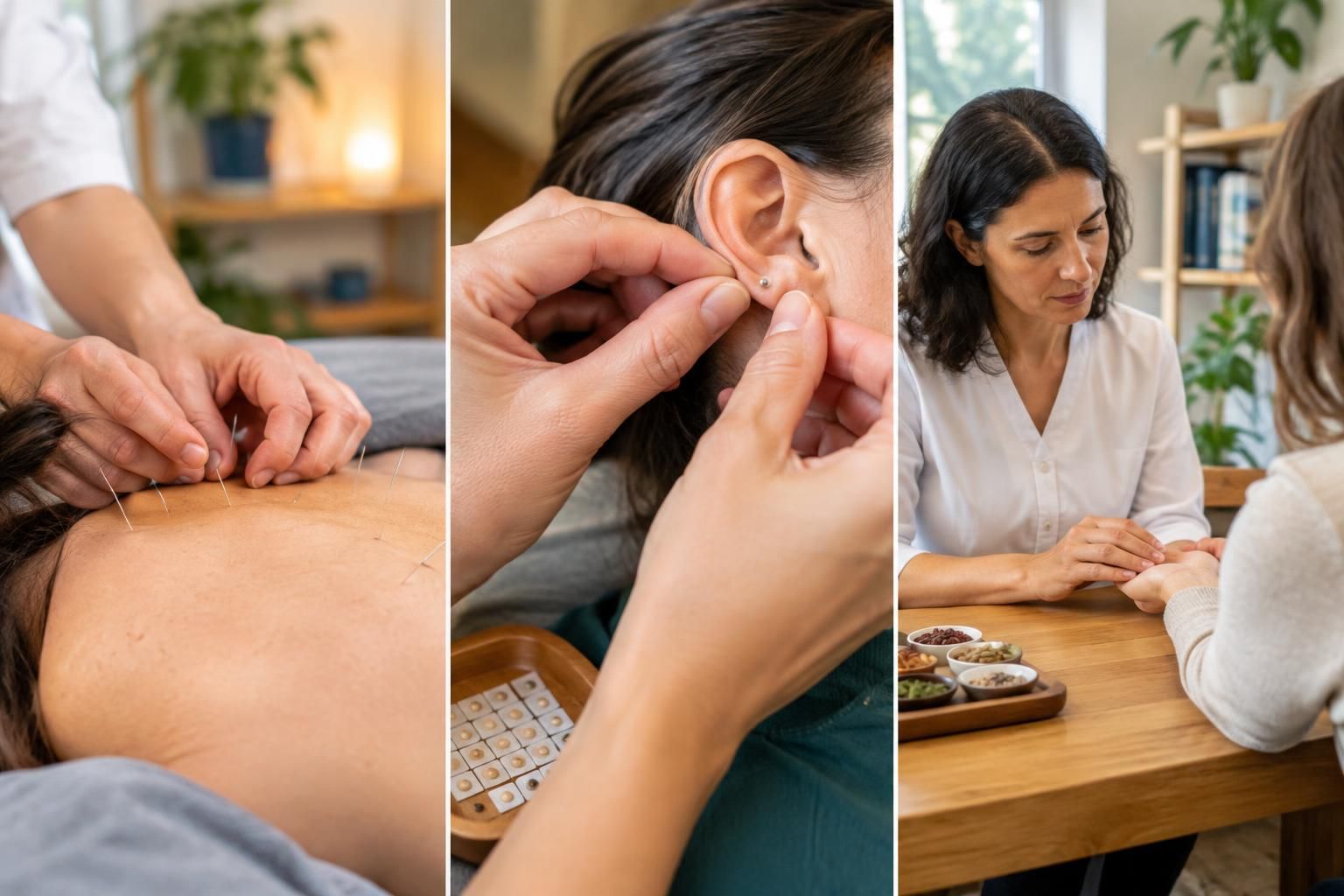
- Standard acupuncture: uses body and/or ear points for broader goals like pain, digestion, stress, inflammation, or symptom regulation. Needles are usually removed during the visit.
- Auricular acupuncture: focuses on ear points, but it isn’t automatically SAAT and isn’t limited to allergy-related complaints.
- Ear seeds: taped seeds or beads press ear points. They don’t pierce the skin and aren’t retained acupuncture needles.
- NAET: combines avoidance instructions, muscle testing, and acupressure/acupuncture concepts. It’s a separate system from SAAT.
- SAAT: uses one retained ear needle per targeted trigger. The claim is trigger-specific desensitization, but that isn’t clinical proof that a food allergy has resolved.
What Happens During a SAAT Treatment Cycle
A typical visit includes trigger history, ear-point selection, needle placement, and tape coverage. The needle often stays in place about 3 to 4 weeks, depending on protocol and skin tolerance.
You’ll usually get cleaning instructions and warnings to watch for irritation or infection. What shouldn’t happen is unsupervised food reintroduction, especially with IgE-mediated reactions, anaphylaxis, or an epinephrine auto-injector prescription. SAAT doesn’t replace allergy testing, diagnosis, or a medically supervised plan.
Which Food-related Reactions People Seek Acupuncture for
Food Allergy vs Food Sensitivity vs Intolerance
This distinction matters because the more your reaction looks like a true food allergy, the less room there is for trial-and-error. Acupuncture, SAAT, or other complementary approaches may be explored for quality-of-life support, but the medical risk changes completely when IgE, anaphylaxis, or delayed meat allergy such as alpha-gal syndrome is involved.
| Reaction type | Typical pattern | What to prioritize | Where acupuncture usually fits |
|---|---|---|---|
| IgE-mediated food allergy | Fast symptoms: hives, swelling, wheeze, vomiting, anaphylaxis | Allergist diagnosis, avoidance, epinephrine plan | Not a replacement; discuss only as adjunctive care |
| Alpha-gal syndrome | Delayed reaction after mammalian meat, often 2–6 hours later | Testing, trigger avoidance, emergency plan | Sometimes discussed with SAAT, but not proven care |
| Food intolerance | Dose-related bloating, cramps, diarrhea; often lactose, FODMAPs, alcohol | Diet review, GI workup, enzyme or intake changes | May help stress or symptoms, not the underlying intolerance |
| Food sensitivity or MCAS-type symptoms | Variable flushing, itching, fatigue, GI symptoms, “reacts to everything” | Careful diagnosis; rule out allergy, GI disease, MCAS | Some seek symptom support, but claims should stay modest |
A person with a confirmed peanut or shellfish allergy is in a different category from someone who feels foggy or bloated after certain meals. The first person needs formal allergy testing, strict avoidance guidance, and an epinephrine auto-injector if prescribed. The second person may need a food diary, an elimination-and-rechallenge plan supervised by a clinician, celiac testing, lactose evaluation, or a GI referral before assuming “allergy.”
SAAT conversations often involve foods such as dairy, wheat, egg, peanut, shellfish, red meat in alpha-gal syndrome, or broad “histamine” reactions. But the trigger list does not prove the treatment works. It mostly shows what people hope to change.
If your reaction is rapid, systemic, respiratory, or has ever required emergency care, treat it as medically serious first. If symptoms are vague, delayed, or digestive-only, start by clarifying whether you are dealing with allergy, intolerance, sensitivity, MCAS, or something else entirely.
Safety, Risks, and Why Acupuncture Should Not Replace Allergy Care
When Strict Avoidance and Epinephrine Still Matter
If you have a confirmed IgE-mediated food allergy, past anaphylaxis, or reactions with breathing trouble, throat tightness, faintness, or widespread hives, acupuncture does not change the safety rules. Avoid the allergen, carry your epinephrine auto-injector, and follow your allergist’s emergency plan.
The main risk usually is not the needle itself. According to the National Center for Complementary and Integrative Health, acupuncture is generally low risk when performed by a properly trained practitioner using sterile, single-use needles. The bigger danger is false confidence: eating a trigger food after SAAT, auricular acupuncture, NAET, or standard acupuncture because symptoms seem better.
Keep these in place even if you try acupuncture-based care:
Keep these safety measures in place even if you try acupuncture-based care.
- Two epinephrine auto-injectors available at school, work, restaurants, travel, and social events.
- A written anaphylaxis action plan explaining when to use epinephrine and when to call emergency services.
- Updated allergy testing and diagnosis before changing exposure risk.
- Supervised reintroduction only when your allergist approves it, such as an oral food challenge in a medical setting.
Symptom improvement is not proof that immune reactivity is gone. If being wrong could mean anaphylaxis, treat acupuncture as supportive care, not a replacement for allergy medicine.
What to Ask Before Trying Acupuncture or SAAT for Food Allergies
Before you book, treat the first visit like a screening conversation, not a promise of desensitization. A credible practitioner should be comfortable working around your allergist’s diagnosis and safety plan.
Ask:
- If it’s SAAT, were you trained in that protocol, and how long will the ear needle stay in place? Many SAAT providers describe a retention period of about 3 to 4 weeks, but you should confirm their process.
- What claims do you make for confirmed IgE food allergy versus food sensitivity, food intolerance, alpha-gal syndrome, or MCAS-like symptoms?
- Do you require allergy testing or medical diagnosis before treating suspected food reactions?
- What side effects should I watch for: skin irritation, infection, pain, dizziness, or worsening symptoms?
- If I have a history of anaphylaxis, do you expect me to keep strict avoidance and carry my epinephrine auto-injector?
- Would you ever recommend reintroducing a trigger food without allergist-supervised guidance?
If the answers minimize anaphylaxis risk or suggest you can “test” foods at home after treatment, walk away.
Who May or May Not Be a Good Candidate
A reasonable candidate is someone who understands acupuncture or SAAT as an adjunct, not a replacement for diagnosis, avoidance, or emergency planning.
- Confirmed IgE-mediated food allergy: Only consider acupuncture-based care for stress, symptom coping, or general wellbeing. Keep your allergist, avoidance plan, and epinephrine auto-injector.
- History of anaphylaxis: You’re not a candidate for food “testing” after treatment. Any reintroduction question belongs with an allergist, often with supervised challenge planning.
- Vague post-meal symptoms: Start with medical evaluation. You may be dealing with food intolerance, celiac disease, reflux, IBS, food sensitivity, or something unrelated to food allergy.
- Alpha-gal syndrome or MCAS: These are complex conditions. SAAT is discussed in some patient circles, but it shouldn’t replace specialist-led diagnosis and management.
- Food intolerance: Acupuncture may be worth discussing for associated discomfort or stress, but it won’t make lactose malabsorption or enzyme deficiencies disappear.
Poor candidates include anyone being pressured to stop avoidance, skip testing, abandon epinephrine, or reintroduce trigger foods based only on a retained ear needle or symptom change.
Bottom Line: Realistic Expectations for Acupuncture and Food Allergies
Acupuncture may help some people with digestion, stress, nausea, or coping, but it has not been shown to eliminate a food allergy or reliably prevent IgE-mediated reactions. That distinction matters.
- Confirmed food allergy or past anaphylaxis: continue strict avoidance, carry your epinephrine auto-injector, and stay under allergist care. Acupuncture or SAAT is only an adjunct.
- Alpha-gal syndrome or Mast Cell Activation Syndrome (MCAS): do not self-diagnose from food reactions alone. These require medical evaluation and follow-up.
- Vague post-meal symptoms: first sort out food allergy, food sensitivity, and food intolerance. The next step may be allergy testing, GI evaluation, or dietitian-guided tracking.
- Food intolerance: acupuncture will not correct lactose malabsorption, celiac disease, or enzyme deficiencies, though it may support comfort.
- SAAT, NAET, ear seeds, or standard acupuncture: treat claims cautiously. SAAT is a specific auricular acupuncture method linked to Dr. Nader Soliman, but evidence remains limited by normal clinical research standards, including the evidence quality emphasized by the National Center for Complementary and Integrative Health.
If you try it, do not reintroduce trigger foods without medical guidance.
The practical question is not whether acupuncture can replace allergy care. It cannot. The better question is whether acupuncture, auricular work, or SAAT is a reasonable adjunct while diagnosis, avoidance, epinephrine access, and emergency planning stay in place.
If reactions are vague, get medical evaluation before labeling them as allergy, sensitivity, intolerance, MCAS, or alpha-gal syndrome. If you have confirmed food allergy or prior anaphylaxis, speak with an allergist before trying acupuncture.