


If your bottom teeth hurt when sick, the pain is often coming from pressure, inflammation, dryness, or jaw tension rather than the teeth themselves. A cold, flu, sinus infection, upper respiratory infection, or sore throat can irritate nearby nerves and muscles, making lower teeth, gums, or molars ache.
That doesn’t mean you should ignore it. Illness-related tooth pain is usually dull, shifting, or tied to congestion, facial pressure, mouth breathing, or clenching at night. Dental trouble is more likely when pain is sharp, one-sided, worse when biting, or comes with swelling, pus, bad breath, or fever.
This guide will help you sort out what’s probably temporary, what you can safely do at home, and when it’s time to call a dentist or doctor. For medical context, organizations such as the American Dental Association, CDC, and Mayo Clinic emphasize that tooth pain with swelling, fever, drainage, or trouble swallowing or breathing needs prompt professional evaluation.
Common Reasons Bottom Teeth Ache During Illness
Bottom teeth can ache during illness because the nerves around your face, throat, jaw, gums, and teeth share pain pathways. Your brain may read irritation in nearby tissues as a toothache, even when the dental nerve itself isn’t the source.
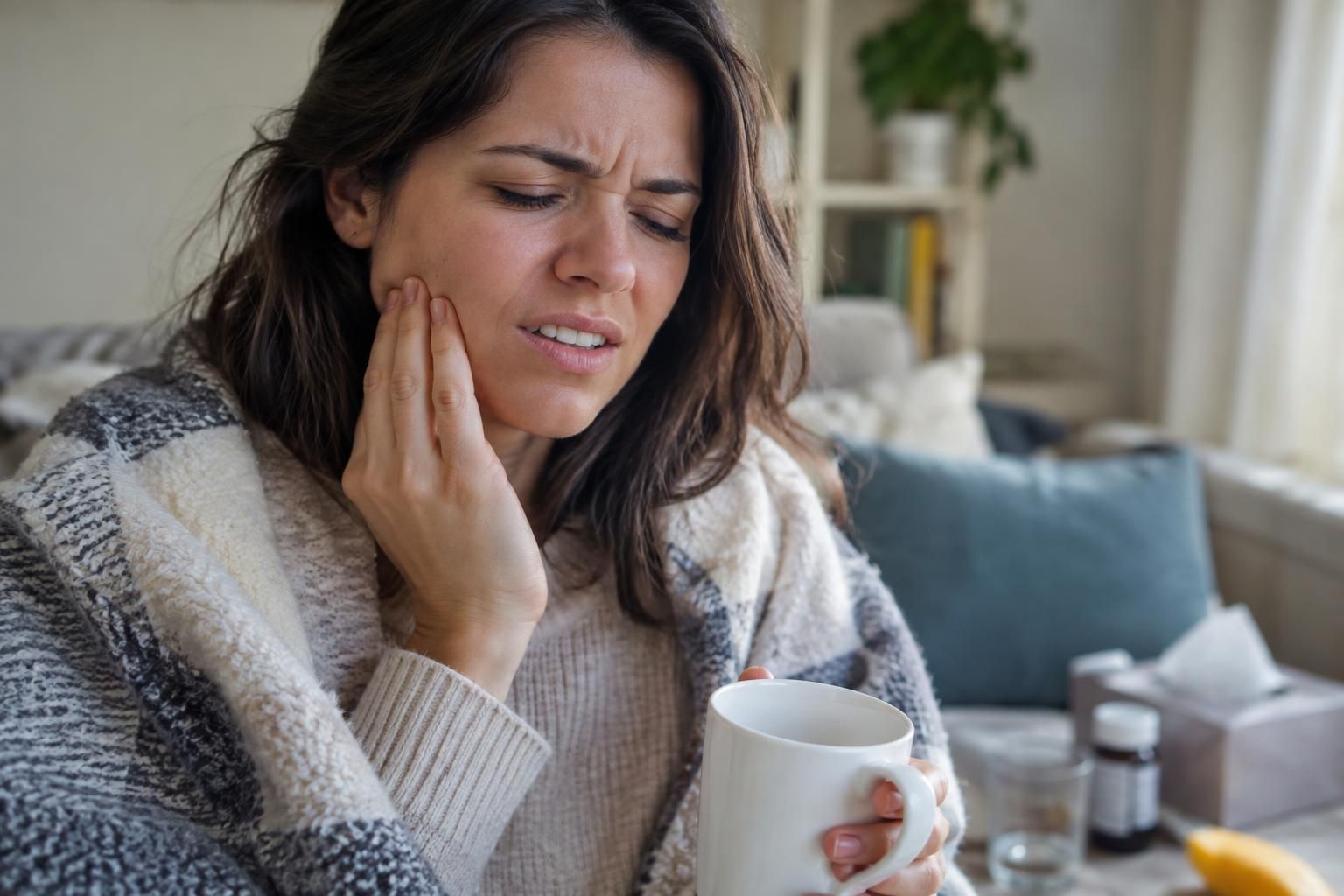
- Referred pain from the throat or jaw: A sore throat, swollen glands, or inflamed jaw muscles can send pain into the lower teeth. This is one reason a significant viral throat infection or possible strep throat may make your gums or bottom molars feel sore.
- Jaw clenching or bruxism: When you’re feverish, stressed, coughing, or sleeping poorly, you may clench without noticing. That pressure can irritate the jaw joint and the ligament around the teeth, causing tooth sensitivity or a dull lower-tooth ache.
- Dry mouth and mouth breathing: Nasal congestion often forces you to breathe through your mouth, especially at night. Less saliva means more dryness, gum irritation, and sharper sensitivity along the bottom teeth.
- Dehydration: Fever, sweating, poor appetite, and not drinking enough water can thicken saliva and leave the mouth more acidic and irritated. That can make teeth and gums feel tender.
- General inflammation: Flu-like body aches don’t just affect large muscles. Inflamed tissues around the throat, gums, and jaw can make existing mild sensitivity feel much louder.
A helpful clue is the pattern: sickness-related pain usually feels broad, achy, or shifting rather than sharp, localized, and bite-specific.
How Colds, Sinus Pressure, and Throat Infections Can Trigger Tooth Pain
A common cold, flu, or other upper respiratory infection can set off a lower toothache through shared nerve pathways. Your dental nerve, jaw joint, throat, and sinus cavity don’t report pain in perfectly separate lanes, so inflammation in one area can feel like it’s coming from the bottom teeth.
Can sinus pressure cause lower tooth pain? It can, although upper teeth are more commonly affected because of their location near the maxillary sinuses. If nasal congestion creates facial pressure, headache, and facial tenderness, the ache may radiate downward through the jaw. A typical example is a dull lower molar ache that starts the same day as congestion and gets worse when you bend forward or press around the cheeks.
| Trigger | Why bottom teeth may hurt | Usual pain pattern | Extra clues |
|---|---|---|---|
| Cold or flu | Facial inflammation and body-wide sensitivity | Broad, achy, shifting | Runny nose, fatigue, headache |
| Sinus infection | Pressure around the sinus cavity may refer pain | Deep molar pressure | Facial tenderness, thick drainage |
| Sore throat or possible strep | Throat and jaw inflammation irritate nearby nerves | Gum pain or jaw ache | Sore throat, fever, swollen glands |
| Night congestion | Mouth breathing and clenching dry tissues | Worse on waking | Dry mouth, tight jaw |
Throat infections can do this too. With a viral sore throat or possible strep throat, the inflamed throat and nearby jaw muscles may make gums and lower teeth feel sore, especially when swallowing or talking.
Nighttime often amplifies the problem. Nasal congestion pushes you into mouth breathing, which dries the gums and tooth enamel surface. Add clenching from poor sleep, and tooth sensitivity can feel much sharper by morning.
When the Pain is Actually a Dental Problem
Illness-related tooth sensitivity usually feels broad, dull, or “all over” and rises and falls with congestion, sore throat, facial pressure, or jaw tension. A dental problem is more likely when the pain locks onto one tooth or one small gum area and keeps getting worse even as the rest of your symptoms improve.
A lower molar that aches during a stuffy cold can be referred pain. But if that same tooth hurts sharply when you bite, throbs on its own, or feels taller than the teeth around it, think dental nerve irritation, tooth infection, cracked tooth, or dental abscess until a dentist rules it out.
Signs the pain may be dental instead of sickness-related include:
- Pain in one specific tooth, not a general lower-jaw ache
- Pain when biting, chewing, or tapping the tooth
- Swelling in the gum, jaw, cheek, or under the chin
- Pus drainage, a pimple-like bump on the gum, or bad breath with a bad taste
- Fever that doesn’t fit the rest of your illness
- Rapidly worsening pain, especially with facial tenderness or headache
- Tooth sensitivity to heat that lingers after the heat is gone
Here is a simple decision path: if three or four bottom teeth feel sore on both sides while you are congested, monitor it and focus on hydration, nasal relief, and jaw relaxation. If one tooth reacts sharply every time you chew or has a swollen gum beside it, call a dentist.
Tooth sepsis is uncommon but serious. It can feel like a severe tooth infection plus whole-body symptoms: fever, chills, weakness, confusion, fast heartbeat, spreading swelling, or trouble swallowing or breathing. That’s urgent care or emergency care, not home treatment.
Antibiotics may be needed for a bacterial infection, but they’re not useful for a viral infection and should only be prescribed by a dentist, primary care doctor, or urgent care clinician.
Home Care to Ease Tooth and Jaw Discomfort
Over-the-counter Relief and Self-care
Treat sickness-related toothache as temporary inflammation first, but watch whether it starts acting like a true dental problem. At home, the goal is to reduce pressure, calm gum irritation, and relax the jaw.
A practical sequence:
- Use pain relievers safely. Acetaminophen or ibuprofen can help with tooth sensitivity, gum pain, headache, sore throat, and jaw soreness. Use them only as directed on the label or by a clinician. Ibuprofen is not right for everyone, especially with certain stomach, kidney, bleeding, or medication issues.
- Don’t rely on the “3-3-3 rule” without guidance. It often means taking three ibuprofen tablets, three times a day, for three days, but tablet strength and personal health risks vary. It is not a universal toothache rule.
- Try a saltwater rinse. Mix salt into warm water, swish gently, and spit. It may soothe gum inflammation and dry mouth irritation, but it will not cure a tooth infection or dental abscess.
- Brush gently, not aggressively. Use a soft toothbrush and fluoride toothpaste. When you’re sick, teeth and gums may feel more sensitive because of mouth breathing, dehydration, and throat or jaw inflammation.
- Relax the jaw. If lower teeth hurt more at night, clenching or bruxism during sleep may be part of it. Rest your tongue on the roof of your mouth, keep your teeth slightly apart, and use a warm compress along the jaw muscles.
Avoid chewing hard foods on the sore side. Do not put aspirin directly on the gum or tooth, because it can burn the tissue.
Foods, Hydration, and Rest
Dry mouth can make bottom teeth ache because saliva normally cushions tissues, buffers acids, and keeps the mouth from feeling raw. Nasal congestion pushes you toward mouth breathing, especially at night, which is why tooth and gum sensitivity can feel worse when you’re trying to sleep.
Keep it simple:
- Sip water often; add electrolytes if you’re sweating, feverish, vomiting, or not eating much.
- Choose soft foods such as soup, yogurt, oatmeal, eggs, smoothies, or mashed vegetables.
- Avoid very cold, very hot, acidic, sugary, or crunchy foods if they trigger tooth sensitivity.
- Elevate your head slightly if nasal congestion or facial pressure is making the ache worse.
- Rest as much as you can; inflammation feels louder when you’re run down.
A quick self-check can help you decide whether home care is working: rate the pain morning and evening, note whether it is one tooth or many teeth, and write down any swelling, fever, bad taste, or pain when biting. If the pain becomes more localized or more intense over 24 to 48 hours, stop treating it like routine sick-day sensitivity and call a professional.
Warning Signs That Need a Dentist or Doctor
Illness-related lower tooth pain should improve as congestion, sore throat, dehydration, and jaw tension settle. Get a dentist involved when the pain acts local, dental, or progressive rather than feeling like you are simply sick all over.
Call a dentist if you notice:
- Sharp pain in one tooth or one side of the jaw
- Pain when biting, chewing, or tapping the tooth
- Swelling in the gum, cheek, jaw, or under the tongue
- Bad breath, bad taste, or pus drainage near a tooth
- Tooth sensitivity that lingers after hot, cold, or sweet foods
- Pain that keeps worsening or doesn’t ease as the rest of your illness improves
That’s the pattern where a tooth infection, cracked tooth, gum infection, or dental abscess can masquerade as sickness-related toothache. For example, a lower molar ache during nasal congestion may be referred pain, but lower tooth pain with gum swelling and pus is not just sinus pressure.
See a primary care doctor or urgent care if tooth or gum pain comes with signs of a spreading or bacterial infection: persistent fever, facial tenderness, severe headache, worsening sore throat, trouble swallowing, or suspected strep throat or sinus infection. Antibiotics only help bacterial infections and need a clinician’s judgment.
Go to emergency care now for possible tooth sepsis or deep-space infection: fever with chills, rapid heartbeat, dizziness, confusion, difficulty breathing, trouble opening your mouth, or swelling spreading into the face, neck, or floor of the mouth.
How to Prevent Tooth Pain When You're Sick
You can’t always prevent sickness-related tooth sensitivity, but you can lower the odds by keeping your mouth moist, your gums calm, and your jaw relaxed while you recover.
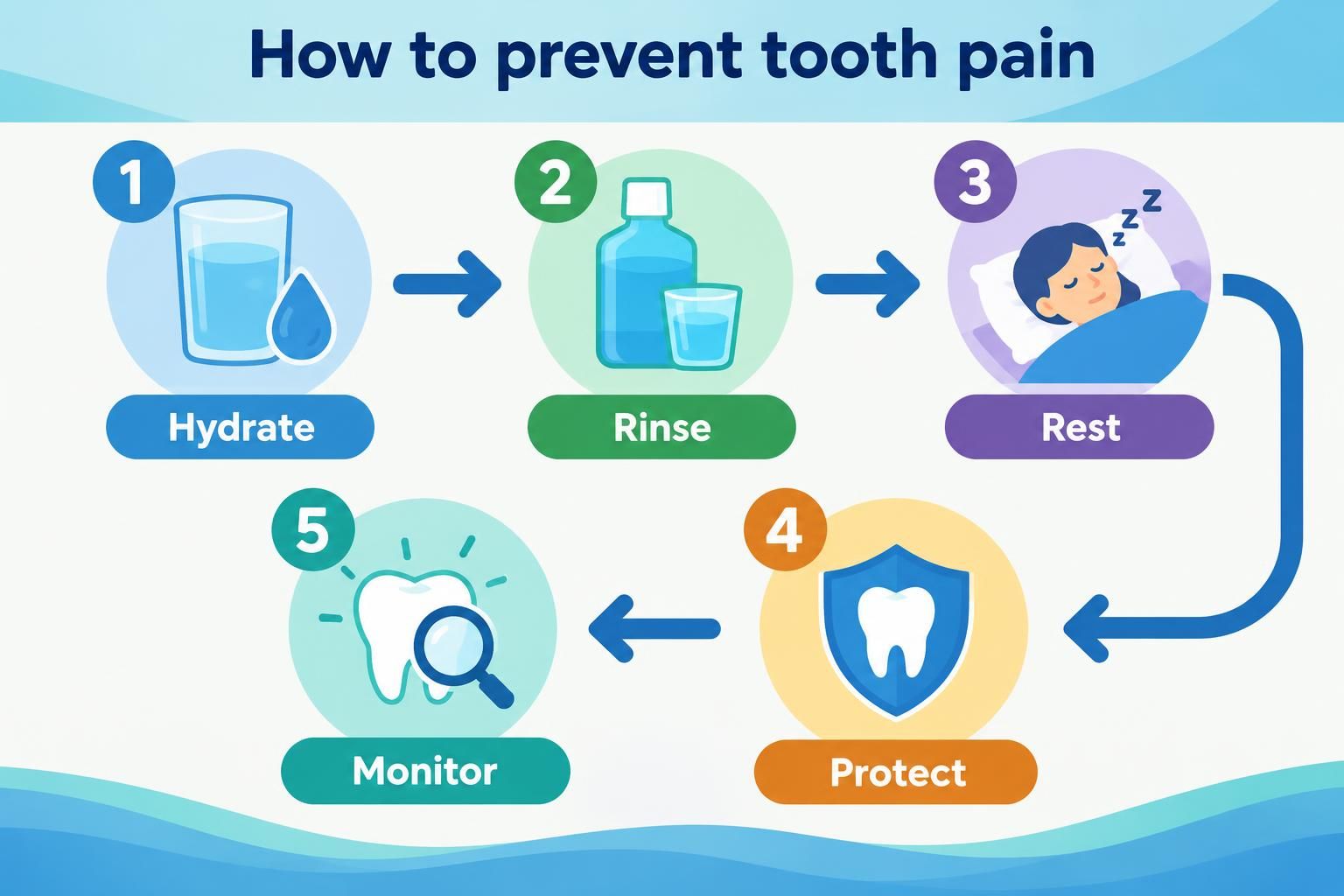
- Stay ahead of dry mouth. Sip water often, and use electrolytes if you’re sweating, eating less, or recovering from fever. Dehydration and mouth breathing reduce saliva, which can make teeth and gums feel more sensitive.
- Manage nasal congestion early. Steam, saline spray, and sleeping slightly elevated may help you breathe through your nose instead of your mouth. That matters most at night, when bottom teeth may ache more from dryness and clenching.
- Keep brushing gentle but consistent. Use a soft toothbrush and fluoride toothpaste twice daily. If your gums feel sore, don’t scrub harder; use lighter pressure and clean carefully along the gumline.
- Rinse when your throat or gums feel irritated. A warm saltwater rinse can soothe gum inflammation and clear mucus residue, but it will not treat a tooth infection or dental abscess.
- Watch your jaw. If you notice clenching, bruxism, temple soreness, or tooth sensitivity after sleep, try a warm compress before bed and relax your jaw with your teeth slightly apart.
If the same tooth hurts every time you’re sick, or the pain comes with swelling, pus, bad breath, or pain when biting, book a dentist visit.
If your bottom teeth hurt when sick, the pattern matters. A broad ache that tracks with congestion, sore throat, dry mouth, facial pressure, or nighttime clenching is often temporary. Sharp, worsening pain in one tooth, especially with swelling, pus, fever, or pain when biting, needs dental or medical care.