


Acute sickness means a sudden-onset illness or condition that develops quickly and is often short-term, though duration depends on the cause. Think of a fever with cough and congestion, a one-day vomiting illness, or symptoms that start after altitude, heat, a medication, or another known exposure.
Use this simple decision matrix: sudden new symptoms = treat as acute and watch for red flags; ongoing symptoms for months = discuss chronic illness; sudden worsening of a chronic condition = seek same-day medical advice.
Mild symptoms can often start with rest, fluids, and monitoring. Trouble breathing, chest pain, confusion, severe dehydration, or rapidly worsening illness needs urgent care.
What Acute Sickness Means
Acute sickness means a sudden-onset illness or condition that develops quickly, often over hours to a few days. It’s not one specific disease. It’s a timing and pattern description doctors use for problems that come on fast, such as a respiratory infection, stomach virus, acute sinusitis, acute bronchitis, or symptoms after a clear exposure like high altitude.

Most acute illnesses are short-term, but “acute” doesn’t always mean “minor.” A brief episode of nausea and vomiting may pass with fluids and rest, while sudden chest pain, severe breathing trouble, or confusion needs emergency care. The label tells you the illness started quickly; the cause and severity determine what to do next.
Acute Vs. Chronic Illness
The simplest difference is time course.
- Acute illness: starts suddenly, changes quickly, and often improves within days to a few weeks, depending on the cause. Example: waking up with fever, cough, congestion, and body aches that point to a respiratory infection.
- Chronic illness: lasts for months or longer and usually needs ongoing management. Examples include asthma, diabetes, or chronic kidney disease.
- Acute worsening of a chronic illness: a long-term condition suddenly gets worse. That should be treated as a same-day medical issue, not just “business as usual.”
So what does this mean in practice? If symptoms are new, sudden, and noticeably different from your baseline, think acute first. Track how fast they’re changing, watch for red flags, and don’t assume a short-term illness is harmless just because it came on quickly.
Common Symptoms of Acute Sickness
Acute sickness often shows up as a sudden change from your normal baseline: you felt mostly fine, then within hours or a day you’re feverish, nauseated, coughing, unusually weak, or just clearly “off.” The exact symptom pattern gives clues about what’s driving it.
| Symptom pattern | Common clue | Timing to watch | Sensible next step |
|---|---|---|---|
| Fever, cough, congestion | Respiratory infection or acute bronchitis | Worsening over 1–3 days can matter | Monitor breathing and fever |
| Facial pressure, thick drainage | Possible acute sinusitis | Symptoms lasting over 10 days need review | Call a clinician |
| Nausea, vomiting, diarrhea | Stomach infection or food trigger | Dehydration can develop quickly | Push fluids in small sips |
| Headache, nausea after altitude | Possible acute mountain sickness | Often starts within hours after ascent | Stop climbing; descend if worse |
Common symptoms include fever, chills, body aches, sore throat, cough, nasal congestion, headache, fatigue, nausea, vomiting, diarrhea, dizziness, and reduced appetite. You may also notice faster heart rate, sweating, poor sleep, or trouble keeping up with normal activities.
Symptoms That Need Urgent Attention
Some symptoms move acute sickness out of the “watch and rest” category. Get urgent medical advice or same-day care if you have shortness of breath, chest pain, confusion, fainting, a stiff neck with fever, severe headache, severe abdominal pain, blue lips, or symptoms after a known toxic exposure.
Dehydration is a big one, especially with vomiting or diarrhea. Warning signs include very little urination, dark urine, dry mouth, dizziness when standing, extreme thirst, sunken eyes, or unusual sleepiness. In babies, older adults, and people with chronic illness, don’t wait for symptoms to become dramatic before seeking care.
Common Causes of Acute Sickness
Infections, Inflammation, and Environmental Triggers
Most acute sickness comes from something that irritates, infects, inflames, or stresses the body quickly. “Acute illness” does not name the cause by itself; it describes sudden, relatively short-term symptoms compared with a chronic illness.
Infections are the biggest everyday category. Viruses can cause sudden fever, cough, sore throat, congestion, nausea, vomiting, or diarrhea. Bacterial infections can also develop quickly, causing conditions such as acute sinusitis, strep throat, urinary tract infection, pneumonia, or skin infection. Acute bronchitis is often viral, but it can still leave you with a rough cough and chest congestion for days or weeks.
Inflammation can also trigger acute symptoms without a classic infection. Examples include an asthma flare, allergic reaction, gout attack, appendicitis, pancreatitis, or sudden worsening of an existing condition. These can feel like acute sickness because your baseline changes fast, even if the underlying vulnerability was already there.
Environmental and exposure-related causes matter too. Headache, nausea, dizziness, or fatigue after rapid travel to high altitude may signal acute mountain sickness. Heat illness, foodborne toxins, chemical exposure, medication reactions, and carbon monoxide can also cause sudden illness. Radiation sickness is a specific acute condition after significant exposure and needs prompt medical evaluation.
The practical question is not just “Do I feel acutely sick?” It is “What likely triggered this, and does it need prompt care?”.
How Acute Sickness is Diagnosed
Diagnosis starts with the pattern: how fast symptoms began, what changed from your baseline, and what exposure may have triggered it. A clinician will usually check vital signs first, especially temperature, heart rate, blood pressure, breathing rate, and oxygen level, because those numbers help separate a mild acute illness from something that needs faster treatment.
They’ll ask targeted questions: Did you have a fever, nausea, vomiting, cough, chest tightness, rash, severe pain, recent travel, altitude exposure, new medication, contaminated food, or contact with someone sick? That history often narrows the cause before any test is ordered.
Testing depends on the suspected source, not on the label “acute sickness.” Common options include nasal or throat swabs, urine testing, blood tests, and imaging when a complication is suspected.
- Nasal or throat swabs for respiratory infections
- Urine testing if dehydration or urinary infection is possible
- Blood tests for signs of infection, inflammation, electrolyte problems, or organ stress
- Imaging, such as a chest X-ray, when pneumonia or another complication is suspected
For acute sinusitis or acute bronchitis, diagnosis may be mostly clinical unless symptoms are severe, prolonged, or unusual.
Treatment Options and Home Care
Treatment depends on what’s causing the acute illness, not on the label itself. A viral respiratory infection may need rest, fluids, fever control, and time, while a bacterial infection, asthma flare, severe dehydration, altitude-related illness, or toxic exposure may need targeted medical treatment.
For mild symptoms, home care usually starts with rest, fluids, light foods as tolerated, safe over-the-counter medicine, and simple comfort measures.
- Rest and reduced activity until fever, dizziness, or weakness improves
- Small, frequent sips of water or oral rehydration solution, especially with nausea or vomiting
- Light foods as tolerated, such as crackers, rice, soup, bananas, or toast
- Over-the-counter fever or pain medicine if it’s safe for you
- Saline spray, humidified air, or honey for cough and congestion, depending on age and health status
Some acute sickness does go away on its own, especially mild viral infections or short stomach bugs. But watch hydration closely. Dry mouth, very dark urine, minimal urination, confusion, fainting, or inability to keep fluids down are warning signs that home care may not be enough.
When to See a Doctor or Go to Urgent Care
Seek medical care based on severity, speed of worsening, and your risk level. A mild cough or short stomach bug may not need a visit, but a sudden illness after high-altitude exposure, a possible toxin or radiation exposure, or symptoms that are getting worse instead of better should be checked.
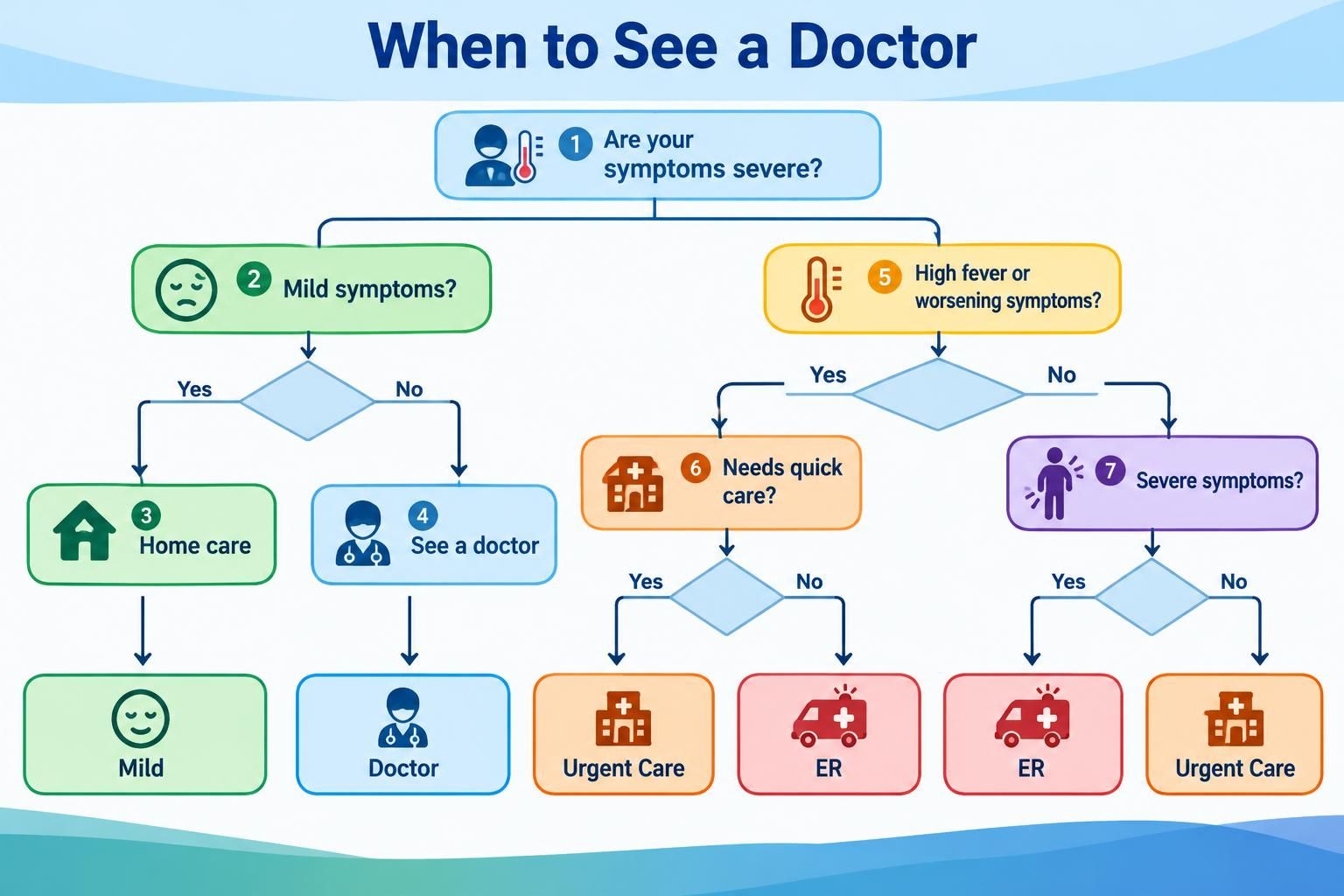
- Call your doctor within 24 to 48 hours if fever lasts more than a few days, symptoms improve then return, sinus pain or cough is worsening, or nausea and vomiting make it hard to keep fluids down.
- Go to urgent care the same day for suspected dehydration, persistent vomiting, wheezing, painful swallowing with fever, severe ear or sinus pain, or symptoms after travel, high altitude, contaminated food, or a known exposure.
- Seek emergency care now for trouble breathing, chest pain, blue lips, confusion, fainting, seizure, stiff neck, severe abdominal pain, vomiting blood, signs of stroke, or very little urination with weakness or dizziness.
If you’re pregnant, immunocompromised, elderly, caring for an infant, or managing a serious chronic illness, get medical advice sooner.
How to Prevent Acute Illness When Possible
You can’t prevent every acute illness, but you can lower your risk and reduce severity by targeting common triggers: infections, contaminated food or water, environmental exposure, and sudden physical stress.
- Stay current on recommended vaccines, including flu, COVID-19, pneumonia, and travel vaccines when relevant.
- Wash hands before eating, after bathroom use, and after contact with sick people; use sanitizer when soap isn’t available.
- Improve air quality during respiratory virus season: open windows, use HEPA filtration if available, and avoid close contact with people who are actively coughing or feverish.
- Practice food safety: refrigerate leftovers promptly, avoid undercooked high-risk foods, and drink safe water when traveling.
- Reduce altitude risk by ascending gradually, hydrating, limiting alcohol, and resting if headache, nausea, or unusual fatigue starts.
- Follow workplace and medical safety rules around radiation, chemicals, heat, and other environmental exposures.
If you’re at higher risk, sources like MedlinePlus, Mayo Clinic, Cleveland Clinic, and WebMD can help you prepare questions before travel, vaccination, or exposure-heavy activities.
Acute sickness is a sudden change that needs the right response. Note how quickly symptoms appeared, how severe they are, what trigger came first, and whether you’re improving with rest, fluids, and monitoring.
If symptoms are mild and clearly improving, home care may be enough. If you have dehydration signs, worsening breathing, severe pain, confusion, high-risk health conditions, or symptoms after altitude, radiation, chemicals, or another known exposure, seek care based on severity.