


Yes, allergies can cause jaw ache, especially in the upper jaw. When allergic rhinitis inflames nasal passages and sinuses, pressure around the maxillary sinuses can feel like aching in the upper teeth, cheeks, or jaw. A classic pattern is upper jaw discomfort that shows up with congestion, sneezing, postnasal drip, or facial pressure, then eases as your allergy symptoms calm down.
But jaw pain isn’t automatically “just allergies.” One-sided jaw pain with tooth sensitivity or bad breath points more toward a dental problem. Morning jaw soreness, stress, clenching, or pain when opening wide suggests TMJ irritation or muscle strain.
Use the pattern as your first clue: upper jaw plus allergy symptoms may be sinus-related; sharp one-sided tooth pain needs dental attention; severe pain with fever or facial swelling needs prompt care.
Can Allergies Cause Jaw Ache?
Yes, allergies can cause jaw ache, but usually indirectly. Allergic rhinitis can swell the lining of your nose and sinuses, which traps mucus and increases sinus pressure. The maxillary sinuses sit just above the upper back teeth, so pressure there can feel like an upper jaw ache, toothache, facial pressure, or even ear pain.

A typical allergy-related pattern is an ache in the upper jaw that shows up during nasal congestion, runny nose, sneezing, postnasal drip, or coughing, then improves as those symptoms settle. It may feel dull, heavy, or “full” rather than sharp. Because the maxillary sinuses are paired, sinus-related discomfort can affect both sides, but it can also feel stronger on one side if one sinus is more congested.
The lower jaw is less commonly affected by sinus pressure. If your pain is mainly in the lower jaw, worsens when chewing, or comes with morning tightness, stress, teeth grinding, or jaw clenching, the temporomandibular joint (TMJ) and jaw muscles are more likely involved.
Also, allergies and sinusitis aren’t the same thing. Seasonal allergies often cause clear drainage and itching, while a sinus infection may bring worsening facial pressure, thicker discharge, fever, or pain that doesn’t ease. So yes, allergies can explain jaw ache, especially in the upper jaw, but the location and accompanying symptoms matter.
How Sinus Pressure Creates Jaw Pain
Sinus pressure can make your jaw hurt because the maxillary sinuses sit directly above the upper back teeth and upper jaw. During allergic rhinitis, the nasal and sinus lining swells, mucus doesn’t drain as freely, and pressure builds in those air spaces. Your brain can read that irritation as a dull toothache-like ache in the upper jaw, even when the teeth themselves are fine.
That’s why the pattern matters. A sinus-related ache often feels broad, heavy, or pressure-like rather than sharp. It may show up with nasal congestion, runny nose, postnasal drip, facial pressure, headache, or ear pain. Sneezing and coughing can briefly make it worse because they increase pressure and can also tense the jaw muscles.
| Pattern | More sinus-like | Less sinus-like |
|---|---|---|
| Upper jaw ache | Common near maxillary sinuses | Lower jaw pain is less typical |
| Timing | Flares with congestion or allergies | Starts after biting hard or chewing |
| Side | Can affect both sides or one side | Persistent one-sided pain raises dental concern |
| Feel | Dull pressure or fullness | Sharp tooth pain or bite sensitivity |
For example, if your upper jaw aches during a pollen flare and eases as congestion improves, that fits sinus pressure. Pain focused around one tooth, especially with tooth sensitivity or a bad taste, points more toward a dental source. If congestion shifts to worsening facial pressure, fever, or thick drainage, sinusitis becomes more likely than simple seasonal allergies.
Other Common Causes of Jaw Ache
Jaw ache often comes from the joint, muscles, or teeth rather than the sinuses, so the pattern of pain matters: chewing pain, morning tightness, tooth sensitivity, or swelling changes the likely cause.
TMJ and Jaw Muscle Strain
TMJ-related pain usually centers around the temporomandibular joint, just in front of the ear, or the jaw muscles along the cheek and lower jaw. The masseter muscle can feel sore, bulky, or tender when you press it, especially after a stressful day or a night of teeth grinding.
- Jaw soreness that’s worse in the morning
- Pain when chewing, yawning, or opening wide
- Clicking, popping, or a feeling that the jaw “catches”
- Ear pain or pressure without an obvious ear infection
- Headache around the temples
- Tightness after jaw clenching, stress, sneezing, or coughing
Allergy season can still play a role here, just not through sinus pressure alone. Repeated sneezing and coughing can tense the jaw muscles, and feeling run-down or stressed can make you clench without noticing. If your ache is mostly in the lower jaw, around the ear, or worse with movement, TMJ disorder or muscle strain is more likely than sinus-related upper jaw pain.
A simple screen is the three-finger test: stack three fingers vertically and see whether you can fit them between your upper and lower front teeth when opening comfortably. If you can’t, or opening causes sharp pain or locking, your jaw opening range may be limited. That doesn’t diagnose TMJ disorder by itself, but it’s a useful sign to mention to a dentist or clinician.
Dental Problems and Infection
Dental pain tends to be more focused than sinus pain. A tooth infection, cracked tooth, gum problem, or dental abscess can cause jaw ache that feels deep, throbbing, and one-sided. It may spread into the upper jaw, lower jaw, ear, or face, which is why it can be mistaken for sinus pressure.
Signs that point more toward a dental source include:
- Pain around one tooth or one small area of the jaw
- Tooth sensitivity to heat, cold, pressure, or sweets
- Pain that worsens when biting down
- Bad breath, bad taste, or drainage near the gum
- Facial swelling or gum swelling
- Fever or feeling generally unwell
One-sided jaw pain with tooth sensitivity or bad breath deserves dental attention, even if you also have nasal congestion. A blocked maxillary sinus can cause one-sided upper jaw aching, but a dental abscess can become serious if it spreads.
Call a dentist first for localized toothache, bite pain, swelling around a tooth, or recurring pain after dental work. Seek urgent care or an emergency room for severe jaw pain with facial swelling, fever, trouble swallowing, trouble breathing, or rapidly worsening symptoms. Mild jaw pain can sometimes go away by itself when it’s from temporary muscle strain, but dental infection usually won’t resolve safely without treatment.
Symptoms That Suggest a Sinus or Allergy Link
A sinus or allergy link is more likely when the jaw ache shows up alongside nasal symptoms, especially during an allergic rhinitis flare. Think upper jaw pressure that starts when you’re congested, sneezing a lot, or dealing with a runny nose, then eases as your nasal symptoms calm down.
Signs that point toward sinus pressure include upper jaw aching, facial pressure, nasal congestion, postnasal drip, headache, ear pain, and dull discomfort that may flare with sneezing or coughing.
- Aching or pressure in the upper jaw, not the lower jaw
- Facial pressure around the cheeks, nose, or under the eyes
- Nasal congestion, runny nose, or postnasal drip
- Sneezing or coughing that seems to make the ache flare
- Headache or ear pain during the same episode
- Pain that feels dull, heavy, or “full” rather than sharp and tooth-specific
- Symptoms on both sides, especially during a seasonal allergy flare
One-sided jaw pain can still happen with sinusitis, particularly if one maxillary sinus is more inflamed than the other. But one-sided pain with tooth sensitivity, bad breath, gum swelling, or pain when biting points more toward a dental abscess or tooth infection.
The timing helps, too. Allergy-related jaw discomfort often follows exposure to pollen, dust, pets, or mold and comes with clear nasal symptoms. A sinus infection is more suspicious when symptoms become thicker, more painful, or persist beyond a typical allergy flare, especially with worsening facial pressure or fever.
Postnasal drip can also contribute indirectly. It may trigger coughing, throat clearing, poor sleep, and extra jaw clenching, which can make the jaw muscles feel sore even if the original problem started in your sinuses.
When Jaw Pain Needs Urgent Medical Care
Severe, worsening, or infection-like jaw pain shouldn’t be treated as “just allergies.” Allergy-related jaw ache is usually mild to moderate, linked with nasal congestion or sinus pressure, and improves as the flare settles. Pain that’s intense, one-sided, swollen, feverish, or rapidly getting worse needs prompt evaluation.
Get same-day medical or dental help if you notice any of the following:
- Facial swelling, gum swelling, or swelling under the jaw
- Fever with jaw pain, facial pressure, or a worsening headache
- Severe toothache, tooth sensitivity, bad breath, or a bad taste in the mouth
- One-sided jaw pain that feels deep, throbbing, or centered around one tooth
- Trouble opening your mouth, chewing, swallowing, or speaking normally
- Jaw pain after an injury or dental procedure that keeps getting worse
- Symptoms that don’t fit your usual allergic rhinitis pattern or don’t improve as nasal symptoms ease
A dental abscess or tooth infection can cause jaw pain, facial swelling, fever, tooth sensitivity, bad breath, and sometimes ear pain. If the pain seems tooth-based, call a dentist first. If you have fever, spreading swelling, or can’t reach a dentist, go to urgent care.
Go to the emergency room for rapidly spreading facial or neck swelling, trouble breathing or swallowing, confusion, severe weakness, or jaw pain with chest pressure, shortness of breath, sweating, or pain spreading to the arm or back. Those aren’t symptoms to watch at home.
What You Can Do at Home to Feel Better
For mild jaw ache that seems tied to congestion, treat both the sinus pressure and the jaw tension. The goal is to reduce inflammation around the maxillary sinuses while giving your jaw muscles a break.
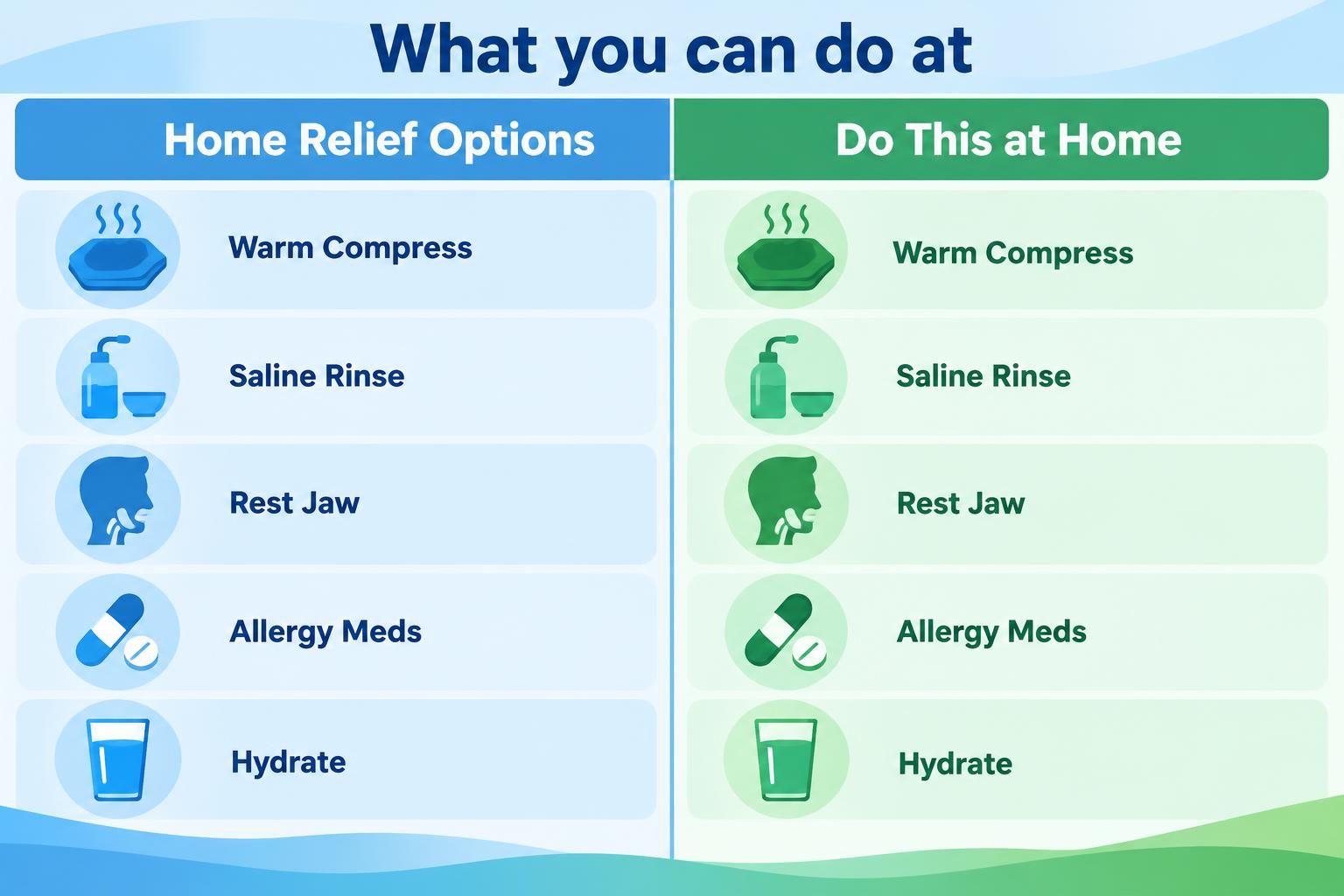
- Use a saline nasal rinse or spray to loosen mucus and ease nasal congestion. Use distilled, sterile, or previously boiled water for rinses.
- Try an antihistamine if your symptoms fit allergic rhinitis: runny nose, sneezing, itchy eyes, and symptoms that flare around pollen, dust, pets, or mold.
- Consider a short-term decongestant if congestion is the main problem, but avoid using medicated nasal decongestant sprays for more than a few days unless a clinician tells you to.
- Apply a warm compress over the cheeks or jaw for 10 to 15 minutes at a time. This can help sinus pressure and relax the masseter muscle.
- Use an over-the-counter pain reliever if you can take it safely. Follow the label, especially if you have stomach, kidney, liver, bleeding, or blood pressure issues.
- Switch to a soft diet for a day or two. Skip gum, chewy bread, tough meat, and wide bites.
- Keep your teeth slightly apart when you’re not eating. Stress, coughing, sneezing, jaw clenching, and teeth grinding can all keep the temporomandibular joint irritated.
Jaw pain from allergies can go away as congestion improves. But if pain gets severe, one-sided, tooth-sensitive, swollen, or feverish, don’t wait it out at home.
How Doctors and Dentists Diagnose the Cause
Diagnosis usually starts with the pattern: where the pain is, what triggers it, and what symptoms came with it. A primary care clinician will ask about allergic rhinitis, congestion, runny nose, postnasal drip, sneezing, coughing, facial pressure, headache, fever, and whether the ache tracks with allergy season or a recent cold.
They may press over your cheeks and upper jaw, look inside your nose and throat, check your ears, and decide whether the pattern fits sinus pressure, sinusitis, or something outside the sinuses. Upper jaw discomfort near the back teeth that flares with congestion points more toward the maxillary sinuses. Lower jaw pain is less typical for sinus-related pain.
A dentist looks for tooth-specific clues such as tooth sensitivity, pain when biting, gum swelling, bad breath, a toothache that localizes to one spot, or signs of a dental abscess or tooth infection. Dental X-rays may be used when infection, decay, or a cracked tooth is suspected.
For TMJ disorder or muscle strain, the exam focuses on the temporomandibular joint, jaw muscles, masseter muscle, bite pattern, clicking, tenderness, teeth grinding, and jaw clenching. The 3-finger test is a simple screen for jaw opening range: if you can’t comfortably fit three stacked fingers between your front teeth, limited opening may suggest TMJ irritation or muscle spasm, not a diagnosis by itself.
If pain is severe, swollen, feverish, or rapidly worsening, evaluation may need urgent care or the emergency room rather than a routine appointment.
The connection between allergies and jaw ache is most believable when the pain sits in the upper jaw and comes with congestion, sneezing, postnasal drip, facial pressure, or ear fullness. If the ache is one-sided, tied to tooth sensitivity or bad breath, or getting worse, think dental first. If it flares with clenching, stress, chewing, or limited opening, TMJ or muscle strain moves higher on the list.