


Massage can be okay during a mild cold recovery, but it’s a bad idea when you’re actively contagious, feverish, or wiped out. If your symptoms are mostly mild body aches, neck tension, stress, or poor sleep, gentle massage may help you feel more comfortable. If you have fever, chills, vomiting, chest pain, shortness of breath, dehydration, or flu-like fatigue, reschedule.
A simple rule: book only when symptoms are improving, your energy is returning, and you can comfortably lie on the table for 30–60 minutes. For example, nasal stuffiness with no fever may call for light self-massage at home, while deep tissue should wait. Always tell your massage therapist what’s going on before the appointment.
Can You Get a Massage When You Have a Cold?
When Massage May Be Okay
You can usually consider massage therapy during the tail end of a common cold if symptoms are mild, improving, and mostly limited to things like light nasal congestion, low-grade body aches, or stress from poor sleep. Think recovery phase, not “I’m actively sick and hoping massage will push it out.”
A gentle Swedish massage is the safer choice because lighter pressure is less demanding on your body. If you’re still tired, shorten the session to 30–45 minutes, skip heat-heavy add-ons, and ask for comfort-focused work rather than intense muscle release.
A practical example: “I had a cold earlier this week. I’m fever-free, my cough is gone, I just have some lingering stuffiness and neck tension. Is it okay to come in, or would you prefer I wait?” That gives your therapist enough information to protect you, themselves, and other clients.
When to Postpone it
Postpone if you are in the acute phase, symptoms are getting worse, or you feel flu-like rather than mildly congested. Influenza-type illness usually means fever, chills, heavy fatigue, widespread aches, and feeling wiped out.
- Fever or chills
- Vomiting or diarrhea
- Chest pain
- Shortness of breath
- Signs of dehydration
- Severe fatigue or dizziness
- A frequent cough or lots of mucus
- Symptoms that started within the last day or two and are still escalating
Deep tissue massage is also a poor fit when you are sick because it can feel like another physical stressor. Waiting until you are no longer contagious is the respectful move.
Potential Benefits of Gentle Massage During a Mild Cold
Easing Body Aches and Muscle Tension
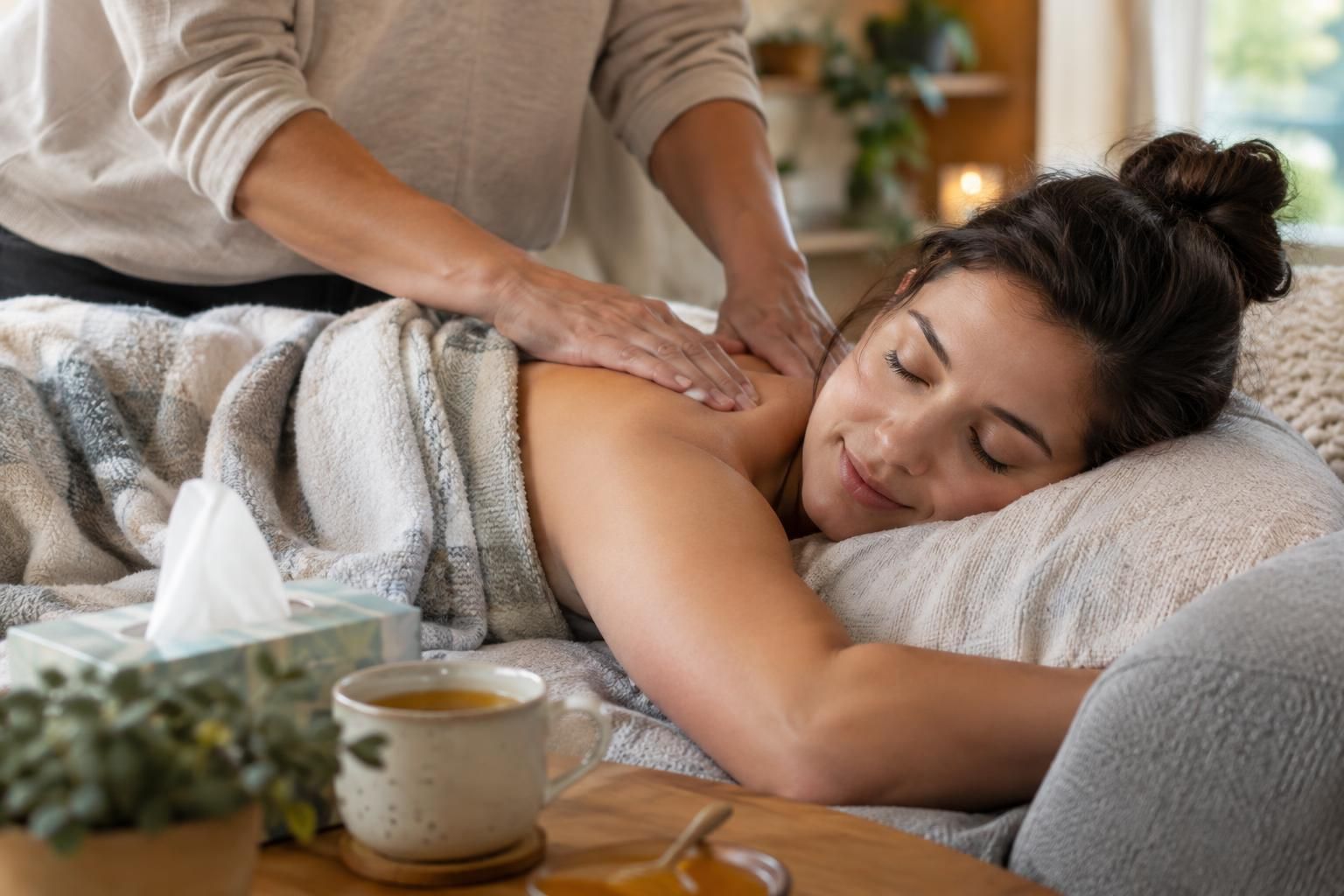
Gentle massage can make the recovery phase of a common cold feel less miserable, especially when your main complaints are body aches, neck tightness, jaw clenching, or sore shoulders from coughing and sleeping poorly. Think light Swedish massage, not “work out every knot” pressure.
The goal is to calm irritated muscles and reduce guarding, not to “flush out” the cold. The National Center for Complementary and Integrative Health discusses massage therapy mainly in relation to pain, stress, and relaxation, which is the right lens here: symptom comfort, not infection treatment.
| Situation | Better choice | Avoid | Why |
|---|---|---|---|
| Mild cold, no fever, improving | Gentle Swedish massage | Deep tissue massage | Less physical stress |
| Worst day, wiped out | Rest at home | In-clinic session | Recovery needs priority |
| Post-cold fatigue | Short, light session | Long intense work | Easier to tolerate |
A good pressure target is “pleasant and easy to breathe through,” often around 2 to 4 out of 10, though tolerance varies. If you’re bracing, holding your breath, or feeling chilled afterward, it’s too much for a sick-day body.
Supporting Relaxation and Sleep
One of the more realistic benefits of massage when sick with a cold is downshifting your nervous system so you can rest. That matters because a mild cold often disrupts sleep through nasal congestion, coughing, or general discomfort. Massage won’t cure the virus, but it may help you feel settled enough to nap or get a better night’s sleep.
A practical example: you’re past the worst of the cold, you haven’t had a fever, your symptoms are improving, but your upper back is tight and you’re sleeping badly. That’s the kind of scenario where a shorter, gentle session may make sense.
Before booking, be direct: “I had a cold this week. I’m fever-free, symptoms are improving, but I still have mild congestion. Is it okay to come in, or would you prefer I reschedule?” A responsible therapist will appreciate the heads-up and can adjust pressure, positioning, and session length.
Can Massage Help Congestion or Sinus Pressure?
If your nose is mildly stuffy or your face feels tight, gentle sinus massage may help you feel more comfortable by easing local tension and encouraging drainage. It won’t “clear” a common cold, but it can make nasal congestion and sinus pressure feel less intense for some people.
Face and Sinus Self-massage Options
Try this only if pressure is mild, you do not have a fever, and touch feels soothing rather than painful.
- Wash your hands, then apply a little lotion or facial oil so you are not dragging the skin.
- Use two fingertips to make small circles along the inner eyebrows for 20 to 30 seconds.
- Glide outward across the brow line, then down along the sides of the nose.
- Make light circles beside the nostrils and across the cheekbones, staying gentle around the eyes.
- Finish with slow strokes from the cheeks toward the jaw and down the sides of the neck.
Pressure should be light to moderate, not digging. If your face feels bruised, sharply painful, or more blocked afterward, stop.
Active infection is a stop sign. If you are feverish, acutely sick, or symptoms are still ramping up, choose rest, fluids, steam, saline spray, and time instead.
Limits of Massage for Respiratory Symptoms
Massage therapy can’t treat the virus causing a cold, and it won’t fix inflamed nasal passages the way appropriate medical care or medication might. Think of sinus massage as comfort care: it may reduce facial tightness, calm your nervous system, and help you relax enough to sleep.
Skip massage and consider medical advice if you have shortness of breath, chest pain, severe sinus pain, dehydration, vomiting, or a fever. And if you’re still coughing, sneezing, and contagious, don’t go to a therapist’s office; you’ll risk spreading illness to the therapist and other clients.
Risks of Getting a Massage While You’re Sick
Fever, Contagious Illness, and Overexertion
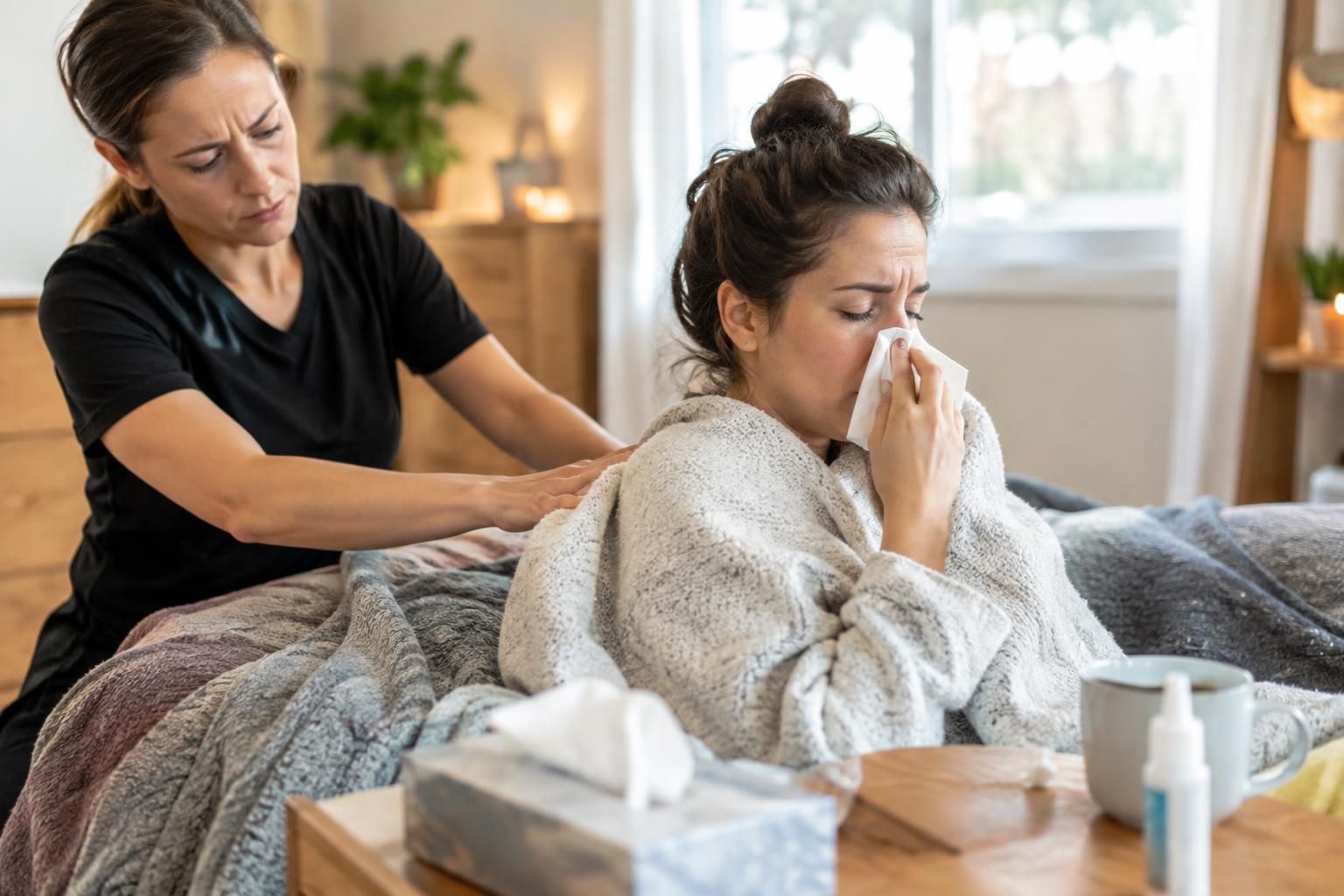
Fever changes the decision immediately: skip the appointment. Chills, severe fatigue, vomiting, dehydration, chest pain, or shortness of breath are also stop signs because massage can feel draining when your body is already under stress.
Flu-like symptoms deserve the same caution. If you have sudden body aches, a high or rising fever, intense exhaustion, or a harsh cough, think influenza or another active infection rather than a mild common cold. That is a reschedule situation for your recovery and therapist safety.
Contagiousness matters too. If you are still coughing, sneezing, blowing your nose constantly, or taking medication just to get through the day, do not go into a massage clinic. You could expose the therapist, staff, and the next client. While you wait, use lower-risk options: rest, fluids, a warm shower, a humidifier, gentle stretching, or very light self-massage for neck and shoulder tension.
Deep Tissue and Hot Treatments to Avoid
Deep tissue massage is usually the wrong intensity when you’re actively sick or newly recovering. Heavy pressure can leave you sore, overstimulated, or wiped out, especially if you already have body aches or low energy. The National Center for Complementary and Integrative Health describes massage as commonly used for pain and stress, but stronger pressure isn’t better during illness.
Also skip hot stones, saunas, steam-heavy spa add-ons, intense cupping, and vigorous lymphatic drainage self-massage during an active infection. Heat and aggressive bodywork can feel taxing if you’re dehydrated or feverish, and lymphatic work isn’t a shortcut for “flushing out” a cold.
Once the worst symptoms have passed, a gentle Swedish massage is usually the safer re-entry point. Keep it shorter, lighter, and easy to stop if you feel worse.
Best Types of Massage if You’re Recovering From a Cold
Gentle Swedish Massage
If you’re past the acute phase and your energy is coming back, Swedish massage is usually the best fit because it is easy to adjust with lighter pressure, slower pacing, fewer intense techniques, and a shorter session. A 30- to 60-minute appointment is a reasonable starting range.
This is the recovery-phase scenario where massage makes sense: no fever, no vomiting, no chest pain, no shortness of breath, and symptoms are improving rather than escalating. You might still have mild body aches, shoulder tension from poor sleep, or stress from being sick for days. Gentle work can help you relax without pushing your body too hard.
Before booking, say something like: “I had a common cold last week. I’m fever-free, symptoms are improving, but I still have mild congestion and low energy. Is it okay to come in, and can we keep the pressure light?”
Light Self-massage at Home
If you’re not ready for an appointment, self-massage is a safer middle ground because you can stop as soon as you feel worse.
For nasal congestion or sinus pressure, try gentle sinus massage with clean hands using the following steps.
- Use light circles along the sides of your nose for 30 seconds.
- Glide outward under the cheekbones with minimal pressure.
- Massage the temples and jaw if they feel tight.
- Stop if pressure increases, pain sharpens, or dizziness appears.
For body aches, use slow strokes over the neck, shoulders, forearms, or calves, or place a tennis ball between your upper back and a wall for gentle pressure. Keep it easy. This is not the time for intense trigger point work or lymphatic drainage self-massage, especially if you may still have an active infection.
The main benefits of massage when sick with a cold are comfort based: less muscle tension, easier relaxation, and maybe better rest once the worst symptoms have passed. If you’re feverish, short of breath, vomiting, dehydrated, chesty, contagious, or wiped out, reschedule and choose rest, fluids, steam, or gentle self-massage instead.