
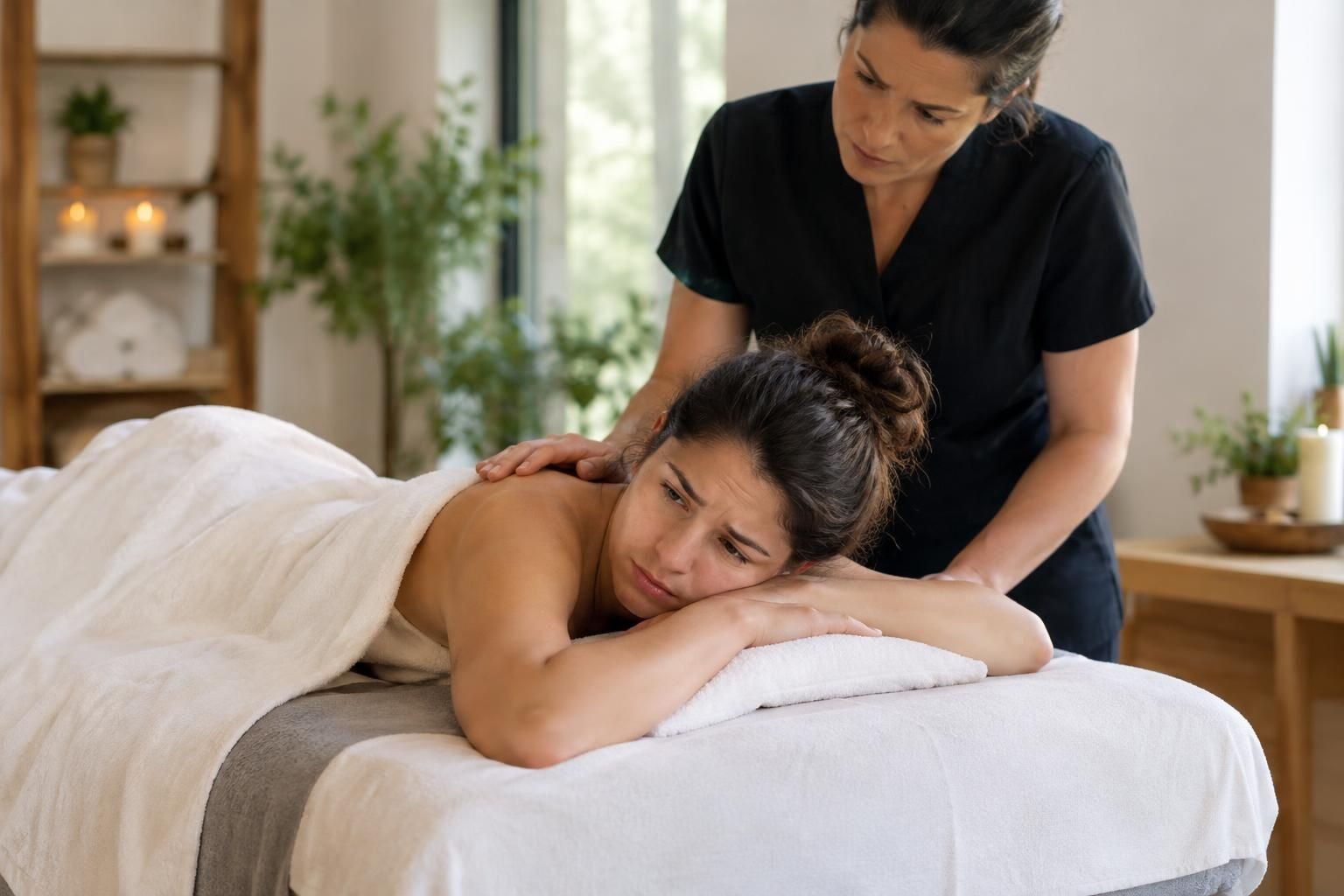
Yes, you can feel sick after a massage, but it’s often a short-term reaction rather than a true illness. Soreness, fatigue, mild headache, brief dizziness, chills, or nausea can happen after deeper pressure, longer sessions, or getting up too quickly.
Use this simple split: sore and tired for a day after deep tissue massage usually means rest, hydrate, and go lighter next time; fever, sore throat, or worsening flu-like symptoms point more toward an illness; severe dizziness, chest symptoms, allergic swelling, or symptoms that don’t improve deserve medical advice.
The key is matching your symptoms to the timing, massage style, pressure level, and your health background.
Can You Get Sick After a Massage?
Massage can leave you feeling unwell, but it usually doesn’t “cause sickness” the way a virus or food poisoning does. More often, you’re feeling a short-term body response: muscle soreness, fatigue, headache, dizziness, mild nausea, chills, or a feverish feeling after stronger pressure or a longer session.

The style matters. A gentle Swedish massage may leave you relaxed and sleepy, while deep tissue massage, sports massage, trigger point therapy, or myofascial release can create more noticeable soreness because they load irritated tissues more aggressively. Dehydration, low blood pressure, getting up too quickly from the table, or a strong nervous system response can also make you feel strange afterward.
What massage doesn’t do is “flush toxins” in a medical sense. If you develop a sore throat, true fever, or worsening flu-like symptoms, you may have been getting an infection already rather than getting sick from the massage itself.
Common Reasons You May Feel Worse After a Massage
Normal Short-term Reactions
Feeling worse after a massage is usually about tissue load, circulation changes, hydration status, and your nervous system response. A lighter Swedish massage might leave you sleepy for a few hours, while deep tissue massage, sports massage, trigger point therapy, or myofascial release can cause more noticeable soreness because the pressure is higher and the session targets irritated areas.
- Muscle soreness or delayed onset muscle soreness, often peaking within 24 to 48 hours
- Fatigue, especially after a long session or if you were already run down
- Mild headache from neck work, jaw tension, dehydration, or lying face-down on the table
- Dizziness when you stand up quickly, especially if you’re prone to low blood pressure
- Mild nausea or chills from a strong relaxation response, heat therapy, or an intense session
If you feel sore and tired for a day after a firm deep tissue massage, but gradually improve with hydration, food, gentle movement, and rest, that usually fits a normal post-massage reaction.
When Symptoms Suggest Something Else
Symptoms are more suspicious when they don’t behave like a short-lived bodywork reaction. A sore throat, true fever, worsening flu-like symptoms, swollen glands, vomiting, rash, or symptoms that intensify over the next day may point to an infection, allergic reaction to massage oil or lotion, or another issue that happened around the same time.
For example, feeling a little dizzy after standing up from the table may be low blood pressure. Feeling faint repeatedly, having chest pain, severe weakness, or dizziness that doesn’t improve with rest and fluids is different.
Call a clinician if symptoms are severe, persistent beyond a couple of days, worsening, or paired with fever, shortness of breath, unusual bruising, significant swelling, or signs of an allergic reaction.
Deep Tissue Massage Side Effects and Sensations
Soreness, Fatigue, and Headache
Deep tissue massage can leave you sore for 24 to 48 hours, especially after strong pressure, a long session, sports massage, trigger point therapy, or myofascial release. That post-session ache can feel a lot like DOMS, or delayed onset muscle soreness, because loaded, sensitive tissue has been worked more intensely than it’s used to.
A lighter Swedish massage might leave you pleasantly heavy or sleepy. A firmer deep tissue session may leave you tired, tender, or mildly inflamed in specific areas. That doesn’t mean the massage “released toxins”; your liver, kidneys, and lymphatic system handle waste clearance. What you’re usually feeling is a mix of local tissue irritation, circulation changes, and a nervous system response.
Headache after deep tissue massage can happen if the neck, jaw, shoulders, or upper back were worked hard, or if you were dehydrated, tense on the table, or sensitive to face-cradle positioning. Mild headache that eases with hydration, food, rest, or a warm shower is usually less concerning than a severe, unusual, or worsening headache.
Dizziness, Chills, and Nausea
Dizziness or nausea right after massage often shows up when you stand too quickly from the table. Relaxation, heat therapy, dehydration, skipped meals, and naturally low blood pressure can all make that woozy feeling more noticeable. If you take blood pressure medication, mention it to your massage therapist before deeper work.
Chills or a feverish feeling can be a temporary nervous system reaction, especially after intense pressure or a long session. But actual fever, sore throat, worsening flu-like symptoms, or symptoms that persist beyond a day or two point more toward an infection or unrelated illness than a normal massage side effect. Rest, hydrate, eat something light, and seek medical advice if symptoms are severe or don’t improve.
How to Tell the Difference Between a Massage Reaction and an Illness
The easiest separator is timing plus trajectory: a massage reaction usually starts the same day, improves with rest and hydration, and fades within 24 to 48 hours. An illness often builds over time, adds respiratory or digestive symptoms, or keeps getting worse.
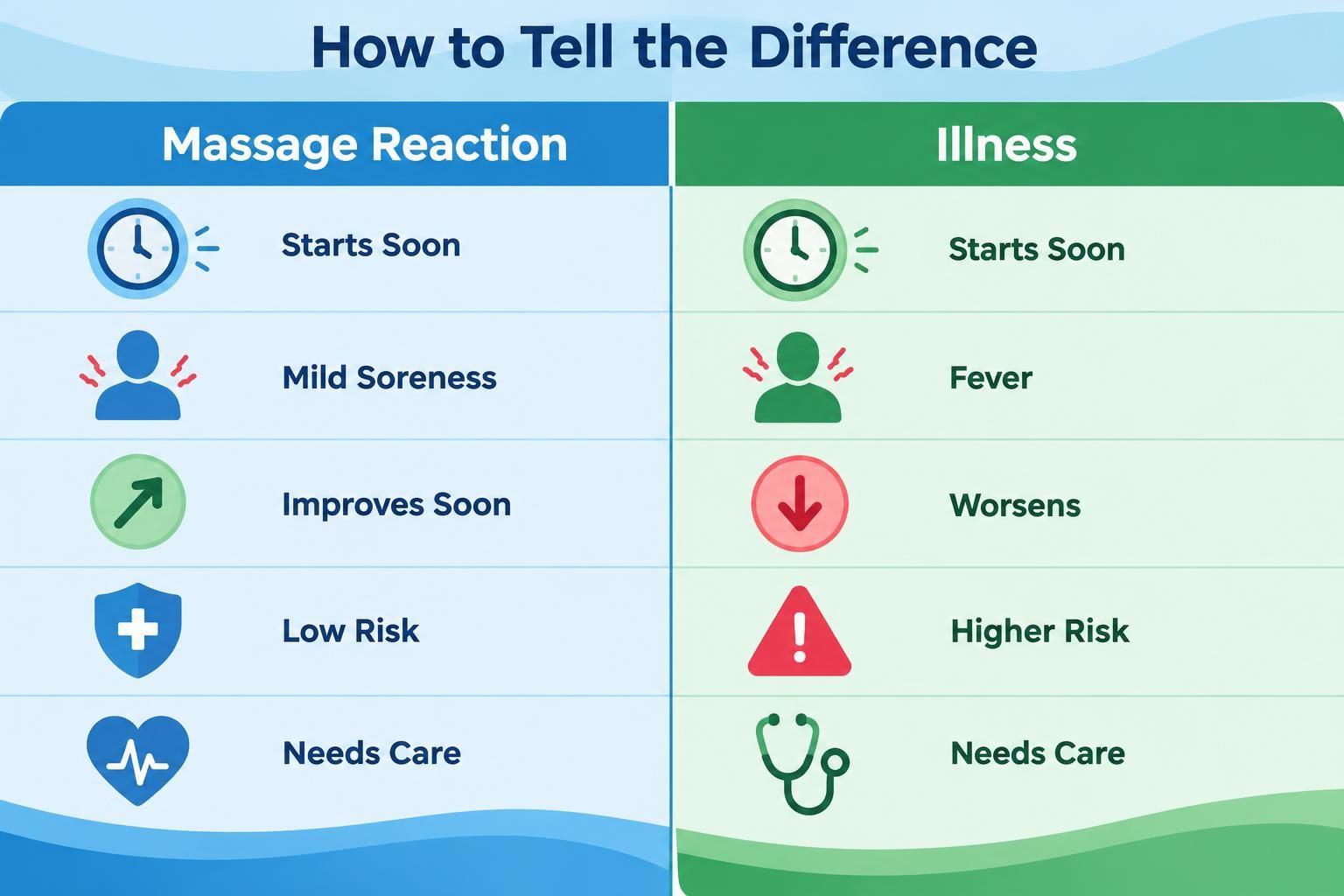
| Symptom pattern | More likely massage reaction | More likely illness or other issue | Next step |
|---|---|---|---|
| Sore, tired, heavy limbs | After deep pressure; improves in 1-2 days | Pain intensifies, swelling, major bruising | Rest, light movement, reduce pressure next time |
| Headache, dizziness, nausea | After standing up, dehydration, low blood pressure | Persistent vomiting, fainting, chest symptoms | Sit, hydrate, eat; seek help if severe |
| Chills or feverish feeling | Brief nervous system response | Measured fever, sore throat, worsening flu-like symptoms | Monitor temperature and call a clinician if worsening |
| Itching, rash, swelling | Mild skin sensitivity | Allergic reaction to massage oil or lotion | Wash skin; get help for breathing or facial swelling |
A sore throat after massage usually means you were already coming down with something, had throat dryness, or reacted to the environment, not that the massage “released toxins.” Massage can affect circulation and your nervous system response, but your liver, kidneys, lungs, and immune system handle waste processing. If symptoms spread beyond soreness and fatigue, treat it as a health issue, not normal aftercare.
Who Should Be Cautious Before Getting a Massage
Medical Conditions and Contraindications
Some people should not book a strong massage, especially deep tissue massage, without medical clearance. Pressure, circulation changes, heat therapy, and table positioning can aggravate certain conditions.
Be cautious, or choose a gentler option, if you have any of the following conditions.
- Pregnancy, especially high-risk pregnancy or new swelling, pain, or blood pressure concerns
- Known or suspected blood clot, unexplained calf pain, redness, warmth, or sudden swelling
- Osteoporosis, where firm pressure could increase fracture risk
- Recent surgery, stitches, implants, or healing incisions
- Fever, active infection, flu-like symptoms, or a feverish feeling
- Bruising easily, bleeding disorders, or anticoagulant medication use
- Blood pressure medication use, especially if you already get dizziness or low blood pressure
- Active skin infection, rash, burns, open wounds, or allergic reaction to massage oil or lotion
Deep tissue, sports massage, trigger point therapy, and myofascial release usually need more caution than Swedish massage. Avoid open wounds, infected skin, inflamed varicose veins, suspected clot areas, and fresh surgical sites. If unsure, ask your doctor what pressure, body areas, and session length are safe.
What to Do if You Feel Sick After a Massage
Start with the basics: sit or lie down, drink water, eat a light snack, and rest for the next few hours. If you feel dizzy or nauseous after getting up from the table, stand slowly and avoid driving until you feel steady; dehydration and low blood pressure can make that woozy feeling worse.
For muscle soreness, use gentle movement, a warm shower, or an ice pack on a tender spot for 10 to 15 minutes. Skip hard workouts, alcohol, sauna sessions, and “detox” cleanses that can leave you feeling more depleted.
Call a doctor or urgent care if you have fever, worsening flu-like symptoms, sore throat that wasn’t there before, fainting, chest pain, shortness of breath, severe headache, unusual bruising, one-sided leg swelling, or symptoms lasting beyond 48 hours. If you suspect an allergic reaction to massage oil or lotion, wash the area and seek advice promptly.
How to Reduce the Chance of Feeling Bad After Future Massages
Future sessions usually go better when you treat massage like a physical stimulus, not just a spa add-on. The biggest factors are pressure, session length, technique, and aftercare.
Use this quick match:
- Mild stress, low soreness tolerance: choose Swedish massage, 45 to 60 minutes, light-to-moderate pressure.
- Tight athletic muscles: choose sports massage or deep tissue massage, but ask for targeted work instead of full-body maximum pressure.
- Chronic knots: try trigger point therapy or myofascial release in shorter sessions, then judge your 24-hour response.
- History of dizziness, nausea, dehydration, or low blood pressure: eat lightly, hydrate beforehand, and sit before standing.
- Pregnancy, recent surgery, osteoporosis, blood clot risk, blood pressure medication, or anticoagulant medication: get medical clearance and book with a licensed massage therapist.
Tell your massage therapist what happened last time, skip heat therapy after an intense session, and plan rest, hydration, and gentle movement afterward.
You can feel sick after a massage, but soreness, fatigue, mild headache, brief dizziness, chills, or nausea that improves within a day or two is usually short-term.
Fever, sore throat, worsening flu-like symptoms, severe dizziness, chest symptoms, allergic signs, or symptoms that do not improve deserve medical attention.