


Cold feet can happen for plenty of everyday reasons, but yes, thyroid disease can be one of them, especially hypothyroidism. When thyroid hormone is low, your metabolism slows and your body may not regulate temperature as efficiently, so your hands and feet can feel unusually cold.
The pattern matters. Cold feet plus fatigue, brain fog, constipation, dry skin, weight gain, or hair thinning points more toward hypothyroidism than cold feet alone.
Doctors usually sort this out with an exam, pulse and blood pressure check, medication review, and thyroid labs such as TSH and free T4.
Why Thyroid Problems Can Make Your Feet Feel Cold
Yes, hypothyroidism can cause cold feet. Thyroid hormone helps set the pace of metabolism, which affects how much heat your body produces and how efficiently it maintains body temperature regulation. When the thyroid gland doesn’t make enough hormone, your “internal thermostat” can run low, leading to cold intolerance.
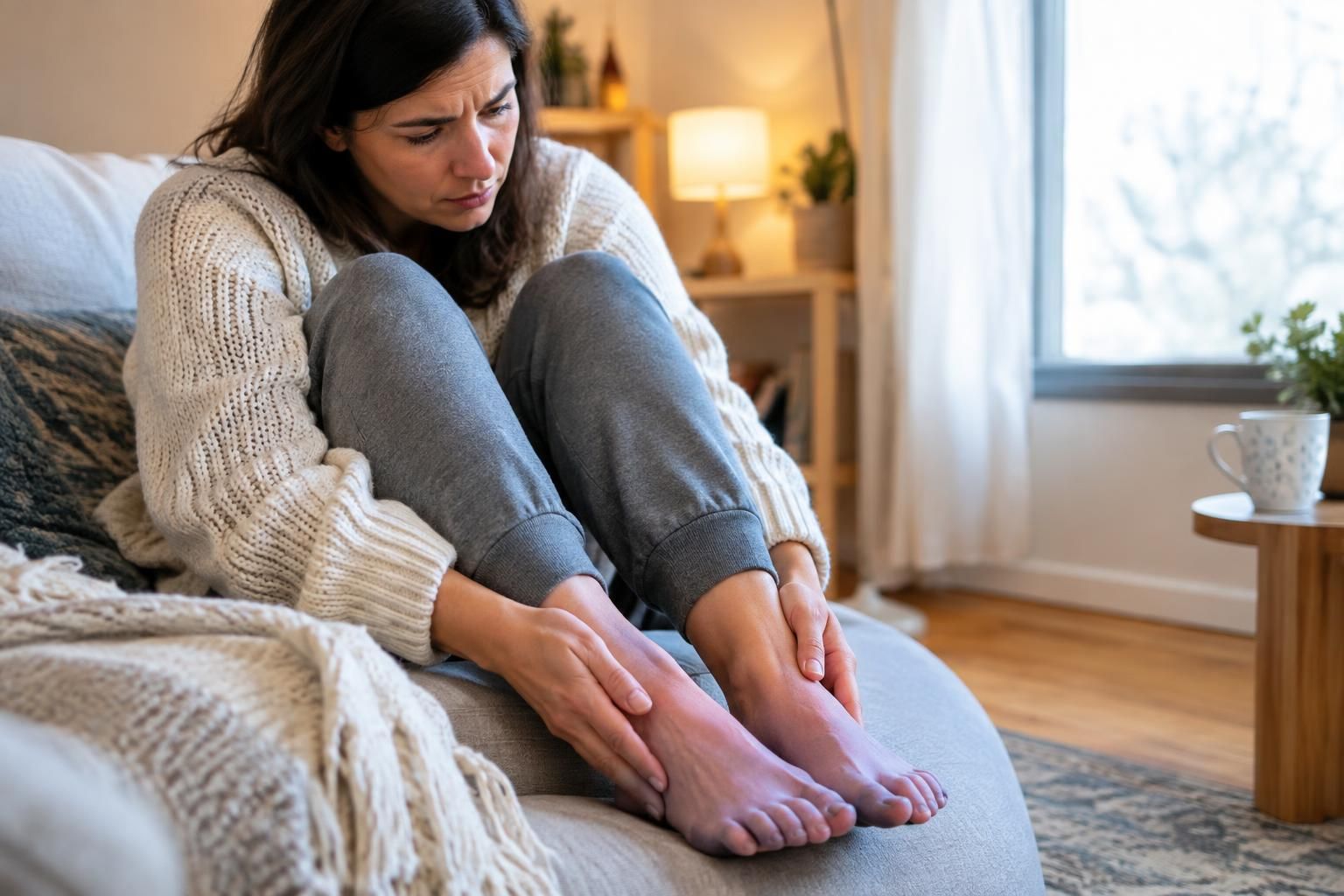
The feet and hands often show it first because they’re farthest from the core. Your body may conserve heat around vital organs, leaving your toes and fingers feeling cold even in a room that doesn’t bother other people. This can happen without a true circulation blockage, which is why thyroid-related cold feet may feel more like an overall chill than sharp pain or color changes.
Hashimoto’s thyroiditis, an autoimmune disease, is a common cause of hypothyroidism. A typical pattern would be cold feet plus fatigue, brain fog, constipation, dry skin, weight gain, or low energy. Cold feet alone doesn’t prove a thyroid problem, but cold feet with that cluster makes thyroid testing much more reasonable.
Other Symptoms That Often Appear With Hypothyroidism
The more thyroid-related the pattern is, the less “just cold feet” tends to stand alone. Hypothyroidism usually shows up as a slowdown across several systems: lower energy, slower digestion, skin and hair changes, and cold intolerance that affects cold hands as well as feet.
| Symptom pattern | Why it fits hypothyroidism | What to track |
|---|---|---|
| Cold feet, cold hands, feeling chilled indoors | Low thyroid hormone can reduce heat production | Room temperature, triggers, daily pattern |
| Fatigue, brain fog, low energy | Slower metabolism can affect stamina and focus | Sleep, workload, afternoon crashes |
| Weight gain, constipation | Digestion and calorie use may slow | Bowel frequency, weight trend |
| Dry skin, hair loss, brittle nails, slow heart rate | Skin turnover and cardiovascular pace may slow | Pulse, skin changes, shedding |
A typical example: someone who develops cold feet along with fatigue, constipation, and gradual weight gain has a stronger reason to ask about a TSH test and free T4 test than someone whose only symptom is chilly toes after sitting.
The biggest warning that something may be wrong with your thyroid isn’t one symptom; it’s a persistent cluster that’s new for you and doesn’t match your usual routine.
Common Thyroid-related and Non-thyroid Causes of Cold Feet
Cold feet can come from hypothyroidism, but they can also come from blood vessel, nerve, blood count, or medication issues. The pattern matters.

- Hypothyroidism: cold feet often come with broader cold intolerance, cold hands, fatigue, brain fog, weight gain, constipation, dry skin, hair loss, brittle nails, or a slow heart rate. Hashimoto's thyroiditis is a common autoimmune cause.
- Raynaud phenomenon: toes or fingers may turn white, blue, then red, usually after cold exposure or stress. Episodes tend to be sudden and color-based, not just a constant chilly feeling.
- Peripheral artery disease: cold feet may come with leg pain while walking, weak pulses, shiny skin, slow-healing sores, or one foot feeling colder than the other.
- Anemia or iron deficiency: less oxygen delivery can make you feel cold, tired, short of breath, lightheaded, or unusually weak. Low vitamin B12 can overlap with numbness or tingling.
- Diabetes-related circulation or nerve issues: feet may feel cold, numb, burning, or less sensitive, even when skin temperature seems normal.
So if your thyroid tests are normal, it’s reasonable to ask about circulation, anemia, iron deficiency, Raynaud phenomenon, diabetes, and medication effects rather than assuming the symptom is “just you.”.
How Doctors Evaluate Cold Feet When Thyroid Disease is Suspected
Doctors usually treat cold feet as a pattern problem, not a thyroid diagnosis by itself. A primary care clinician will ask when it started, whether you also have fatigue, brain fog, constipation, weight gain, dry skin, hair loss, brittle nails, or cold hands, and whether symptoms changed after starting or adjusting levothyroxine.
- Physical exam: checking skin color, swelling, temperature differences, reflexes, and signs of dry skin or thyroid enlargement.
- Pulse check and blood pressure check: a slow heart rate can fit hypothyroidism, while weak foot pulses may point toward circulation problems.
- Medication review: including levothyroxine timing, missed doses, supplements, iron, calcium, acid reducers, beta-blockers, and other drugs that can affect symptoms or absorption.
- Blood tests: usually a TSH test and free T4 test; a thyroid antibody test may be added if Hashimoto’s thyroiditis or another autoimmune disease is suspected.
- Circulation assessment: if pulses are reduced, walking causes leg pain, or one foot is colder than the other, your clinician may order vascular ultrasound or refer you for further testing.
If thyroid labs are unclear or symptoms persist despite treatment, an endocrinologist may help fine-tune the diagnosis.
Treatment Options and What Improvement May Look Like
If hypothyroidism is confirmed, treatment usually means levothyroxine, with dose changes guided by symptoms plus repeat TSH and free T4 results. Cold intolerance, cold feet, fatigue, brain fog, constipation, and low energy often improve gradually as levels normalize, but rarely overnight.
A first reassessment is often 6 to 8 weeks after starting or changing levothyroxine, though timing varies with age, heart history, pregnancy, and baseline thyroid levels. Some people notice small changes sooner, while others see warmth, stamina, and digestion improve over several months.
If you already take levothyroxine and still feel cold, do not just stop it. Feeling better after stopping can happen if the dose was too high, absorption was inconsistent, or another issue caused the symptoms, but that calls for a medication review. Calcium, iron, certain antacids, missed doses, and taking it with food can reduce absorption.
Diet, exercise, hydration, iron, vitamin B12, iodine, and selenium support health, but they do not reliably fix true hypothyroidism alone. Track symptoms so your clinician can separate thyroid response from anemia, Raynaud phenomenon, or circulation problems.
When Cold Feet Need Urgent Medical Attention
Cold feet are usually a routine appointment issue, but they need urgent care when they come with signs that blood flow, nerves, or the whole body may be in trouble.
Seek same-day medical care or urgent evaluation if you notice sudden, severe, or one-sided coldness, color changes, numbness, weakness, injury, signs of infection, or symptoms affecting your whole body.
- One foot is suddenly much colder than the other, especially with new pain.
- Toes or the foot look blue, gray, very pale, or mottled and don’t warm back up.
- You can’t feel a pulse in the foot, or the foot feels numb, weak, or hard to move.
- Cold feet come with chest pain, shortness of breath, fainting, confusion, or severe weakness.
- You have diabetes and develop a new foot wound, blackened skin, spreading redness, swelling, or fever.
- Coldness follows an injury, frostbite exposure, or sudden severe leg pain.
These patterns point away from uncomplicated hypothyroidism and toward problems such as peripheral artery disease, a clot, infection, nerve injury, or severe circulation loss. Raynaud phenomenon can also cause dramatic color changes, but an attack that doesn’t resolve with warming deserves prompt medical attention.
Practical Ways to Stay Comfortable While You Wait for Care
While you’re waiting for labs, a follow-up, or a referral, focus on comfort without hiding warning signs. Warmth may ease symptoms, but it will not fix hypothyroidism, anemia, peripheral artery disease, or Raynaud phenomenon if one of those is the cause.
Wear warm socks and layers, especially over your core, since a warmer torso can help hands and feet feel less cold. Use gentle movement to support circulation, such as short walks, ankle circles, calf raises, or easy cycling if you tolerate it. Stay hydrated, because dehydration can worsen sluggishness and that “cold all over” feeling. Track patterns for 1 to 2 weeks, including time of day, temperature, stress, color changes, numbness, fatigue, constipation, weight change, and whether warming helps. If you use compression socks, choose a comfortable fit and avoid tight bands unless your clinician advised medical-grade compression. Do not stop or change levothyroxine on your own; ask for repeat TSH and free T4 testing first. Keep diet realistic: enough protein, iron, vitamin B12, and iodine matters, but food and exercise alone usually cannot correct true hypothyroidism.
Cold feet are more suggestive of thyroid disease when they come with fatigue, constipation, weight gain, dry skin, hair changes, brain fog, or a slower pulse. If thyroid tests are normal, consider circulation problems, Raynaud phenomenon, anemia, diabetes-related nerve or vessel issues, or medication effects.