


Crohn’s disease can qualify for U. S. disability benefits, but a diagnosis alone won’t get you approved. SSA looks at severity: documented flare-ups, weight loss, anemia, malnutrition, surgery, hospitalizations, bathroom urgency, pain, fatigue, and how often those problems would interrupt full-time work.
Can Crohn's Disease Qualify for Disability Benefits?
Yes—Crohn's disease can qualify for disability benefits, but approval isn’t based on the diagnosis alone. SSA looks at how severe your inflammatory bowel disease is, how long it’s expected to last, and whether your symptoms prevent reliable full-time work.

- Severe complications backed by labs, imaging, colonoscopy, endoscopy, biopsy, CT scan, MRI enterography, or hospitalization records: focus on SSA Blue Book 5.06.
- Symptoms don’t match the listing exactly but still make steady work unrealistic: build a strong residual functional capacity claim.
- You have enough work history and paid Social Security taxes: look at Social Security Disability Insurance.
- You have limited income and resources: look at Supplemental Security Income.
So, is it hard to get disability with Crohn's? It can be, especially if your records only say “Crohn’s disease” without documenting bowel urgency, diarrhea, abdominal pain, fatigue, weight loss, anemia, malnutrition, fistulas, abscesses, strictures, or missed work. The strongest claims connect medical proof to real workplace limits.
How the SSA Evaluates Crohn's Disease Claims
SSA evaluates Crohn’s disease under Blue Book 5. 06, the inflammatory bowel disease listing also used for ulcerative colitis. To meet the listing, your records generally need to show severe, ongoing IBD complications, such as bowel obstruction, fistula, abscess, significant weight loss, anemia, malnutrition, or repeated hospitalizations despite prescribed treatment.
If you don’t meet Blue Book 5. 06 exactly, SSA moves to a residual functional capacity, or RFC, assessment. That’s where many Crohn’s claims are won or lost. The question becomes: what can you still do in a full-time work setting?
- Needing unscheduled bathroom breaks because of diarrhea or bowel urgency
- Missing work during unpredictable flare-ups
- Being off task because of abdominal pain, fatigue, dehydration, or medication side effects
- Needing work close to a restroom
- Having lifting, standing, or stamina limits after surgery or severe weight loss
The evaluation isn’t just “Do you have Crohn’s?” It’s “Can you reliably sustain competitive work with your symptoms, treatment needs, and complications?”
Medical Evidence That Strengthens a Claim
Strong Crohn’s disability claims connect objective findings to real work limits. SSA won’t rely only on “I have pain” or “I have diarrhea”; it wants medical records showing why those symptoms would disrupt a full-time schedule.
- Gastroenterologist notes documenting flare frequency, abdominal pain, diarrhea, bowel urgency, fatigue, and treatment response
- Colonoscopy or endoscopy reports showing active inflammation, ulcers, narrowing, or complications
- Biopsy results confirming inflammatory bowel disease, especially when symptoms overlap with ulcerative colitis or other conditions
- CT scan or MRI enterography findings showing fistula, abscess, stricture, or bowel obstruction
- Blood tests showing anemia, inflammation, dehydration, low albumin, or other signs of malnutrition
- Stool test or fecal calprotectin test results supporting active intestinal inflammation
- Records of hospitalization, emergency visits, IV fluids, bowel rest, or surgery
- Medication history, including prednisone, biologics, immunosuppressants, and side effects like fatigue, infection risk, mood changes, or brain fog
A symptom diary can also help if it’s specific: dates, bathroom trips, missed work, meals skipped, pain levels, and recovery time after flares.
Common Functional Limits Caused by Crohn's Disease
Bathroom Urgency and Unpredictable Flare-ups
Crohn’s-related bowel urgency can become a work limitation when it’s frequent, sudden, and hard to schedule around. SSA won’t usually focus on “diarrhea” as a symptom in isolation; it looks at what that symptom does to your ability to stay on task, remain at a workstation, commute, attend shifts, and avoid excessive breaks.
A strong functional description sounds specific: “I need the restroom 8 to 12 times during a flare, often with less than two minutes’ warning,” or “I can’t work where I’m more than a short walk from a restroom.” That matters for jobs like cashier, delivery driver, machine operator, nurse aide, teacher, warehouse picker, or security guard, where leaving suddenly can disrupt the job or create safety issues.
Flare-ups also matter because Crohn’s disease isn’t always consistent. You may have better weeks, then lose several days to abdominal pain, dehydration, bowel urgency, or recovery after an emergency visit. Repeated missed shifts, late arrivals, unscheduled breaks, hospitalizations, or surgery recovery can support an RFC finding that full-time competitive work isn’t realistic.
Fatigue, Pain, and Concentration Problems
Fatigue from Crohn’s disease can count as a functional limitation when it’s tied to active inflammation, anemia, malnutrition, poor sleep, medication side effects, or recovery from flares. The key is showing how it affects work: needing to lie down during the day, slowing pace, missing deadlines, or being unable to complete an eight-hour shift reliably.
Abdominal pain can limit sitting, standing, lifting, bending, and sustained focus. For example, someone with strictures or partial bowel obstruction symptoms may need frequent position changes, avoid lifting, or stop tasks during waves of pain.
Medication side effects can matter too. Prednisone may cause insomnia, mood changes, or brain fog; biologics and immunosuppressants may bring infection concerns or fatigue. If treatment helps your intestines but still leaves you unable to work consistently, SSA can consider that in the RFC assessment. The strongest claims connect symptoms to measurable work problems: off-task time, extra breaks, reduced pace, absences, and limits on physical activity.
SSDI Vs. SSI for Crohn's Disease
Crohn’s disease can qualify for Social Security Disability Insurance (SSDI), Supplemental Security Income (SSI), or both, but the non-medical rules are different. SSA still looks at the same medical question first: do your inflammatory bowel disease symptoms and treatment effects keep you from sustaining full-time competitive work?
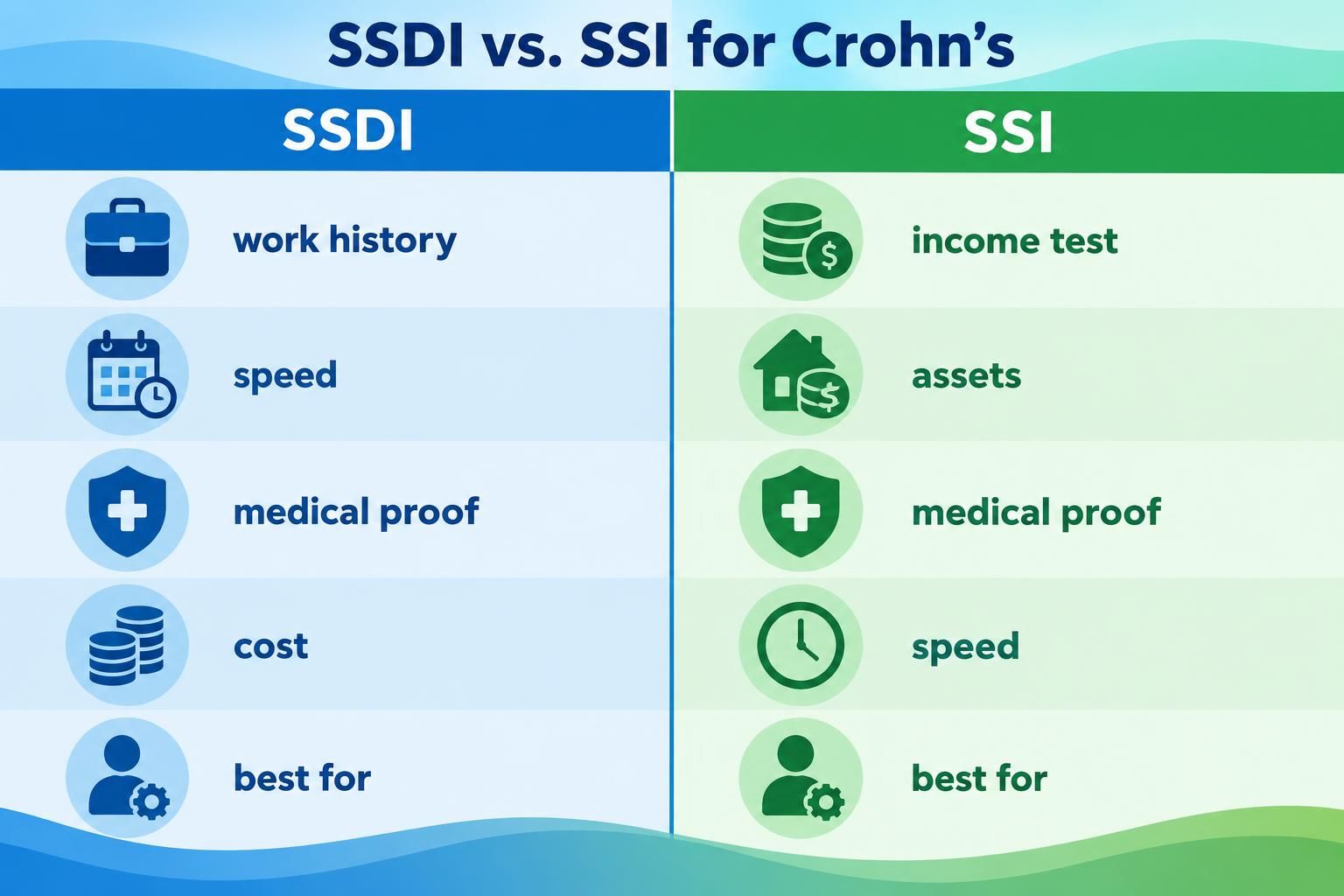
| Program | Best fit | Main non-medical rule | Crohn’s example |
|---|---|---|---|
| SSDI | Workers with enough past earnings | Work credits from payroll taxes | You left a warehouse job after repeated flare-ups and absences |
| SSI | Limited income/resources | Strict financial eligibility | You have little work history and can’t maintain steady work |
| Both | Low SSDI benefit plus financial need | Must meet both sets of rules | Your SSDI amount is very small and you meet SSI limits |
SSDI is usually the stronger route if you’ve built a work history. SSA will review your recent earnings, work credits, and whether your Crohn’s-related limits prevent substantial gainful activity.
SSI doesn’t require work credits, so it can help younger adults, people with interrupted work histories, or those who have been out of the workforce for a long time. But income, assets, living arrangements, and certain support from others can affect eligibility.
Part-time work doesn’t automatically disqualify you, but it can complicate the claim. SSA will look at earnings, attendance, productivity, extra breaks, and whether you’re working only because of special accommodations.
What to Do if Your Claim is Denied
A denial isn’t the end of a Crohn’s disease disability claim. Many approvals happen on appeal, especially when the file gets stronger after the first decision.
Don’t start a brand-new application unless there’s a specific reason. In most cases, you’ll want to appeal within SSA’s deadline, typically 60 days from the date you receive the denial notice.
- If SSA said your condition wasn’t severe enough, add recent gastroenterologist records, hospitalizations, surgery notes, lab results, imaging, and medication side effects.
- If SSA said you can still work, focus on RFC evidence: missed shifts, bathroom urgency, flare frequency, fatigue, pain, and limits on standing, lifting, concentration, or attendance.
- If records were missing, request them from your gastroenterologist, primary care physician, hospitals, and testing facilities.
The first appeal is usually reconsideration. If that’s denied, you can request a hearing before an administrative law judge, where testimony and vocational expert evidence may matter. Appeals can take months, depending on your state and backlog.
Consider legal help for repeated denials, complex medical history, or a hearing.
Living and Working With Crohn's Disease
Crohn’s can be compatible with a long life, especially when you’re followed by a gastroenterologist and treatment keeps inflammation under control. But “living with it” often means building routines around variability: flare-ups, fatigue, bowel urgency, medication side effects, and recovery after hospitalization or surgery.
Practical adjustments that also help document daily functioning include keeping a symptom diary, planning work around restroom access and breaks, tracking nutrition issues with your doctor, asking before changing diet, and remembering that grants are not a substitute for disability benefits.
- Keep a symptom diary tracking diarrhea, abdominal pain, urgency, fatigue, missed work, medication side effects, and bathroom frequency.
- Plan work around restroom access, predictable breaks, remote work options, reduced travel, or flexible scheduling.
- Track nutrition issues such as weight loss, dehydration, anemia, or malnutrition with your doctor, not just at home.
- Ask before changing diet. Raw lettuce can bother some people during flares because roughage may worsen cramping or diarrhea, especially with a stricture.
- Don’t rely on grants as a disability substitute; some nonprofits offer limited assistance, but SSDI and SSI are the main federal disability paths.
You can sometimes work part-time and still pursue benefits, but SSA will look at earnings, attendance, pace, and whether you can sustain work reliably.
Crohn’s disease can support a disability claim when your records show more than a diagnosis: repeated flares, objective test results, treatment history, complications, and work limits that would keep you from sustaining full-time employment. The strongest claims connect symptoms like urgency, pain, fatigue, anemia, weight loss, hospitalizations, or medication side effects to attendance, pace, focus, and restroom access.
If you’re applying or appealing, start by gathering gastroenterology records, lab results, imaging, procedure reports, medication notes, and a simple timeline of missed work or daily limitations. Then compare your evidence with SSA listing 5. 06 and RFC factors before submitting the next form or appeal.