


A hot tub can be okay when you’re mildly sick, but only in a narrow situation: think stuffy nose, minor body aches, no fever, no dizziness, and you’re using a well-maintained private tub. It may loosen congestion and help you feel more comfortable for a short time, but it won’t treat the infection or speed recovery.
Skip the soak if you have fever, chills, vomiting, diarrhea, dehydration, shortness of breath, unusual weakness, or a contagious respiratory illness like flu or COVID-19. Heat can worsen overheating, dizziness, fatigue, and fluid loss, and public hot tubs add the problem of exposing other people.
Decision matrix: Mild cold, no fever, private tub: short, cautious soak may be reasonable. Feverish or dehydrated: don’t use it. Vomiting or diarrhea: don’t use it. Flu, COVID, bad cough, or bronchitis symptoms: avoid public tubs and usually skip soaking. Pregnant, heart disease, weak immune system: ask your clinician or skip it.
The Short Answer: When a Hot Tub May Help vs When to Skip it
Use your symptoms, not the calendar, to decide: a hot tub is only a maybe when you have mild, non-feverish cold discomfort and you can soak privately without exposing anyone else.
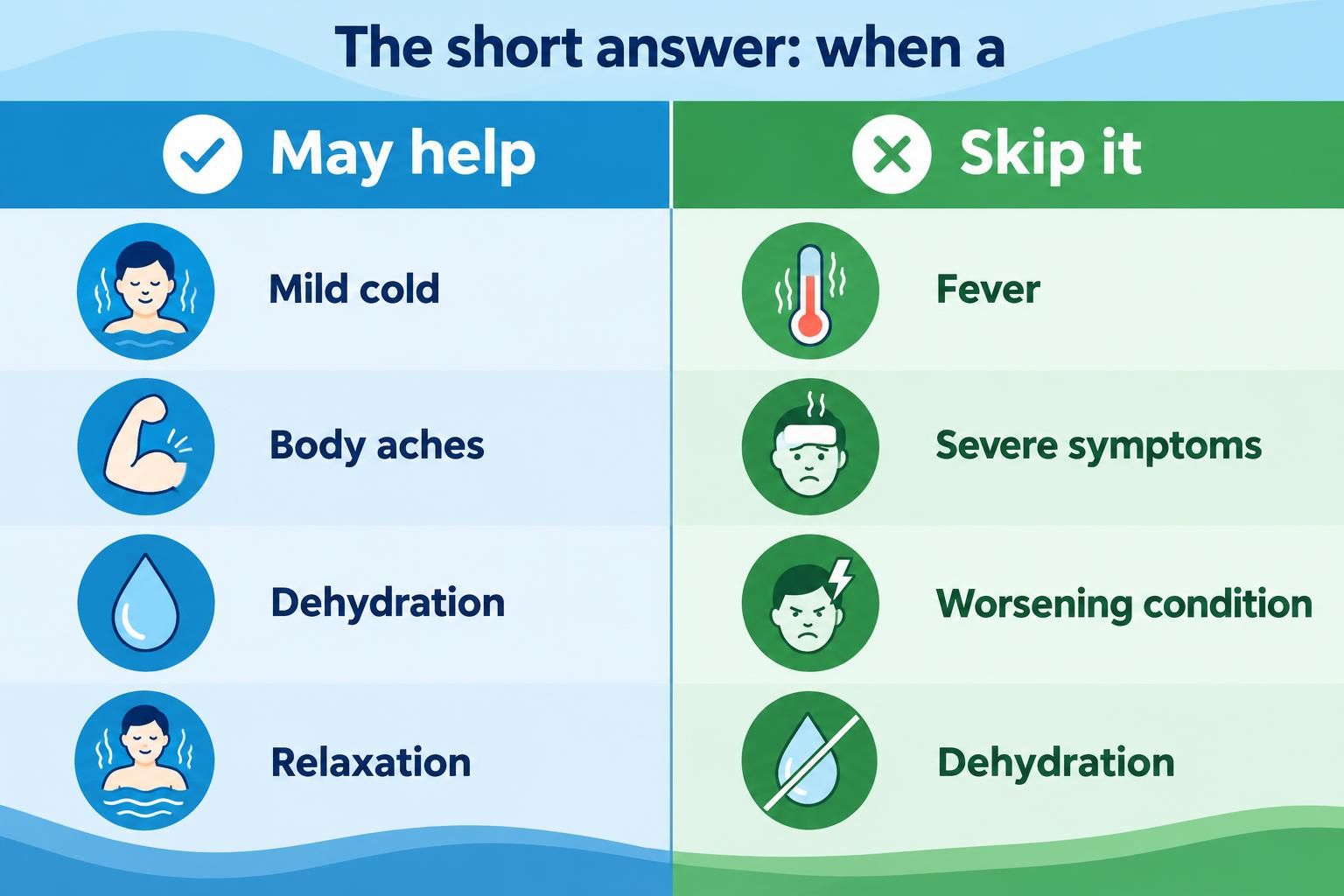
| Symptom situation | Private hot tub | Public/shared hot tub | Best call |
|---|---|---|---|
| Mild congestion, light aches, normal temperature | Short cautious soak may be okay | Skip if coughing or sneezing | Comfort only, not treatment |
| Fever, chills, dizziness, heavy fatigue | Skip | Skip | Heat can worsen overheating |
| Vomiting, diarrhea, poor fluid intake | Skip | Skip | Dehydration risk is too high |
| Influenza, COVID-19, bronchitis symptoms, bad cough | Usually skip | Definitely skip | Rest and avoid exposing others |
The key distinction is mild common cold symptoms versus signs your body is already stressed. Warm water and steam may briefly loosen congestion or relax sore muscles, but that’s hydrotherapy for comfort; it won’t kill a virus, shorten the illness, or replace sleep, fluids, and medical care.
Heat also adds workload. If you’re feverish, dehydrated, lightheaded, or unusually weak, soaking can push you toward worse dizziness, faster fluid loss, and cardiovascular strain. And if you’re contagious, especially with influenza or COVID-19 symptoms, a public hot tub isn’t just a personal choice; it’s an exposure risk for everyone around you.
Can a Hot Tub Help Cold Symptoms Like Congestion and Body Aches?
A hot tub can make a mild common cold feel more tolerable for a short time, especially if your main complaints are nasal congestion, sinus pressure, chills, or achy muscles without a fever. Warm, humid air may loosen mucus the same way a steamy shower can, and the heat can relax tight shoulders, back muscles, and general soreness.
But that relief is comfort, not treatment. Cleveland Clinic and Mayo Clinic both emphasize the basics for cold recovery: rest, fluids, and time. A soak won’t “sweat out” the virus or make you less contagious.
A reasonable use case looks like this: you’re stuffy, a little sore, fully alert, drinking fluids, and using your own clean private hot tub. Keep it short and conservative, because even mild illness can make you more prone to dehydration or lightheadedness.
Skip the soak if congestion comes with fever, chest tightness, wheezing, unusual shortness of breath, or deep fatigue. At that point, heat can feel less like relief and more like added stress.
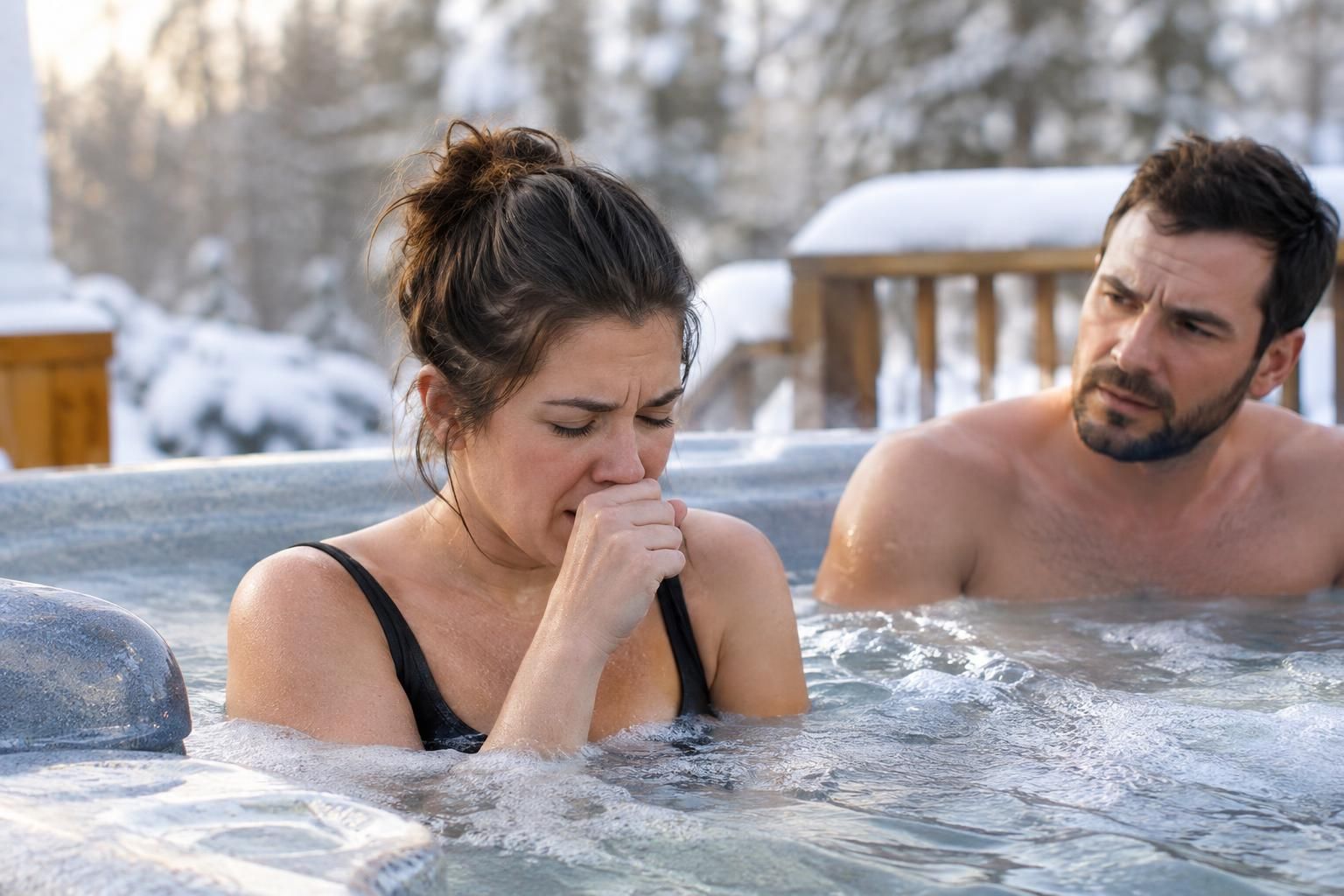
Why Hot Tubs Can Be Risky When You’re Sick
Fever and Overheating
A fever is one of the clearest reasons to skip the hot tub. Your body is already running hotter than normal, and soaking in hot water adds more heat to manage. That can push you toward overheating, chills afterward, weakness, headache, or feeling wiped out instead of relaxed.
The 104°F hot tub limit is a safety ceiling for healthy adults, not a target when you are sick. If you are feverish, even water below that can feel intense because illness changes heat tolerance.
Heat also makes your cardiovascular system work harder. Blood vessels widen, heart rate can rise, and your body tries to cool itself while also fighting infection. For someone with influenza, COVID-19, or another feverish respiratory illness, that extra strain is usually a bad tradeoff. Cleveland Clinic and Mayo Clinic style advice generally lines up here: fever calls for rest, fluids, and monitoring, not heat stress.
So is a hot tub bad if you have a fever? Usually yes. Do not try to sweat it out.
Dehydration and Dizziness
Being sick can quietly dehydrate you before you notice it, especially if you’re sweating, breathing through your mouth, eating less, or taking medications that dry you out. A hot tub can make that worse because heat increases sweating, even when you’re surrounded by water.
The risk jumps if you’ve had vomiting or diarrhea. With a stomach bug, you’re already losing fluid and electrolytes; soaking can increase lightheadedness, racing heartbeat, nausea, or fainting risk. That’s a hard no, not a “short soak and see.” Get out immediately if you feel dizzy, unusually weak, nauseated, confused, chilled despite hot water, short of breath, or like your heart is pounding. Those aren’t normal relaxation signals. They’re signs your body isn’t handling the heat well, and the safer move is to cool down, sip fluids, and rest.
Is it Safe to Use a Hot Tub With Flu, COVID, Stomach Bugs, or Bronchitis?
Use the diagnosis plus your current symptoms. A mild common cold is different from a systemic infection, and these illnesses usually fall on the skip-it side.
- Influenza: Skip the hot tub, especially with fever, chills, weakness, or intense body aches. Heat can add cardiovascular strain and worsen dehydration.
- COVID-19: Skip it while you are acutely sick or still likely contagious. A shared hot tub can expose others through close contact, coughing, and shared surfaces.
- Stomach bug with vomiting or diarrhea: Hard no. You are already losing fluids and electrolytes, so soaking raises the risk of dizziness, fainting, nausea, and worsening dehydration.
- Bronchitis: Usually skip it if you are coughing hard, wheezing, short of breath, feverish, or chest-tight. Steam may loosen mucus for some people, but hot, humid air can feel suffocating or trigger coughing in others.
If symptoms are more than mild congestion, choose rest, fluids, and medical guidance over heat.
Private vs Public Hot Tubs: Hygiene, Germs, and When You Could Expose Others
A private hot tub mainly raises one question: can your body handle the heat? A public or shared hot tub adds another: could you expose other people, or pick up something else while run down?
Use this split:
- Mild cold, private tub, well-maintained water: Reasonable only if you have no fever, no stomach symptoms, and no breathing trouble.
- Mild cold, public/shared tub: Skip it if you are coughing, sneezing, or likely contagious.
- Flu, COVID-19, fever, vomiting, or diarrhea: Skip both private and public tubs.
- Cloudy water, strong chemical smell, slimy surfaces, or uncertain maintenance: Skip it, even if symptoms are mild.
The Centers for Disease Control and Prevention links poorly maintained hot tubs with germs such as Legionella, which can cause a serious lung infection, and Pseudomonas aeruginosa, a common cause of hot tub folliculitis. Proper sanitizer and pH control reduce risk, but they do not make a crowded hot tub a good place to sit through a contagious illness.
If you are sick and considering a hotel, gym, spa, vacation rental, or apartment hot tub, the safer call is simple: wait until you are clearly improving and no longer contagious.
How to Use a Hot Tub More Safely if You Have Mild Symptoms Only
Best Temperature and Soak Time
If you are only dealing with mild cold symptoms, keep the soak cooler and shorter than usual. A conservative starting point is 98°F to 100°F for 10 to 15 minutes, though tolerance varies with your health, medications, and how run-down you feel.
Do not treat the 104°F hot tub limit as a target. It is an upper safety limit, not the best choice when you are sick. Higher heat increases sweating, adds cardiovascular strain, and can make fatigue hit harder afterward.
Use the hot tub only if all of these are true:
- Your symptoms are mild, such as a stuffy nose or light muscle aches.
- You can soak in a private tub, not a shared one.
- The water is clean, properly maintained, and not cloudy.
- You are willing to get out early if you feel worse.
Think of this as comfort-focused hydrotherapy, not treatment. Steam may loosen congestion briefly, and warm water may ease body aches, but it will not shorten a cold or fix the infection.
Hydration and Exit Signs to Watch for
Illness already makes dehydration more likely, especially if you’re eating less, sweating, breathing through your mouth, or taking certain cold medicines. Hot water adds more fluid loss, so drink water before you get in and keep water nearby afterward. Skip alcohol completely; it makes dehydration and lightheadedness more likely.
Get out immediately if you notice:
- Racing heartbeat or chest pressure
- Nausea or stomach cramping
- Shortness of breath or tighter breathing
- Sudden weakness, shakiness, or confusion
- Feeling overheated instead of relaxed
- Symptoms that rebound worse after a few minutes
Cool down slowly after you exit. Sit for a minute, drink water, and don’t jump straight into a cold outdoor temperature if you’re already weak or congested. If a short, mild soak leaves you wiped out, that’s your body telling you rest and fluids are the better plan.
Who Should Avoid a Hot Tub While Sick Altogether
Some people should skip the hot tub while sick even if their symptoms seem mild, because heat can add cardiovascular strain, worsen dehydration, or increase infection risk.
- Heart disease, rhythm problems, chest pain history, uncontrolled high blood pressure, or fainting episodes: avoid soaking unless your clinician has specifically cleared hot tub use.
- Pregnancy: skip it while ill, especially with fever, nausea, dizziness, or poor fluid intake. Mayo Clinic and Cleveland Clinic both advise extra caution with overheating during pregnancy.
- Weakened immune system: if you’re on chemotherapy, high-dose steroids, transplant medicines, or have advanced immune compromise, don’t risk exposure to poorly maintained water or organisms like Legionella or Pseudomonas aeruginosa.
- Older adults or anyone taking sedatives, blood pressure drugs, or alcohol: heat-related dizziness and falls are more likely.
- Anyone with fever, vomiting, diarrhea, shortness of breath, chest pressure, or severe weakness: the hot tub isn’t the right tool today.
For these situations, rest, fluids, and medical advice beat hydrotherapy.
When to Call a Doctor Instead of Trying Heat Therapy
Call a clinician instead of soaking if heat might mask a problem that needs treatment. A hot tub may make you feel looser or less congested for a short time, but it will not treat influenza, COVID-19, bronchitis, pneumonia, dehydration, or a stomach infection.
- Fever that is high, persistent, or paired with chills, rash, stiff neck, confusion, or worsening weakness.
- Shortness of breath, unusual wheezing, chest pressure, bluish lips, or trouble speaking full sentences.
- Vomiting or diarrhea, especially if you cannot keep fluids down, feel faint, or are urinating less than normal.
- Symptoms that improve and then return worse, such as fever coming back after a few days.
- A higher-risk condition, including heart disease, pregnancy, significant lung disease, immune suppression, or advanced age.
- Suspected COVID-19 or flu with worsening symptoms or risk factors for complications.
The Centers for Disease Control and Prevention, Mayo Clinic, and Cleveland Clinic all point to the same rule: warning signs matter more than comfort measures. If you are unsure, skip the soak and call.
Using a hot tub when sick is only a possible option if symptoms are mild, you do not have a fever, you are not dehydrated or dizzy, and you will not expose other people. If you have flu-like symptoms, COVID-19, bronchitis with breathing discomfort, vomiting, diarrhea, or a feverish illness, skip the soak because heat adds stress your body does not need.
The safest rule is simple: a hot tub is short-term comfort, not treatment.