


Warm showers are usually the better choice when you’re sick, especially if you’re congested, achy, or trying to relax before bed. The steam and gentle heat can temporarily loosen mucus and make breathing feel easier, but they won’t cure a cold, shorten the flu, or replace rest and fluids.
Quick guide: stuffy nose or cough — warm shower; body aches — warm shower; fever with chills — brief lukewarm rinse only if it feels good; weak, dizzy, or dehydrated — skip the shower and rest.
Cold showers usually make fever and chills feel worse.
Short Answer: When a Warm Shower Helps More Than a Cold One
A warm shower is usually the better choice when you’re sick because it can ease congestion, loosen mucus briefly, and relax achy muscles without shocking your body. Think warm and comfortable, not hot enough to make you lightheaded.
| Situation | Better choice | Why | Skip if |
|---|---|---|---|
| Stuffy nose or cough | Warm shower | Steam may loosen mucus | You feel dizzy or weak |
| Body aches from a cold or flu | Warm shower | Heat can relax tense muscles | Heat worsens fatigue |
| Fever with chills | Lukewarm rinse, if needed | Less likely to trigger shivering | You’re shaking or drained |
| Flu-like exhaustion | No shower | Rest matters more | Standing feels hard |
If you’ve got a common cold and want a warm shower before bed, it’s reasonable; it may help you breathe easier and settle down. But it won’t shorten the cold or flu, and it’s not a replacement for sleep, fluids, or fever medicine when appropriate.
Cold showers are usually the wrong move if you’re chilled, feverish, or run-down because they can intensify shivering and stress your body.
What a Hot Shower Can Do for Cold, Flu, and Congestion Symptoms
Steam, Nasal Passages, and Mucus Relief
A warm shower can give short-term relief when nasal congestion, postnasal drip, or a cough is making you miserable. The steam works a bit like gentle steam inhalation: it adds moisture to irritated nasal passages and may help loosen thick mucus so it’s easier to blow out or cough up.
Picture this: you’ve got a common cold, your nose is blocked, and lying down makes your cough worse. A 10-minute warm shower before bed may help you breathe through your nose a little better and feel less “stuck,” even though it won’t clear your sinuses completely or cure the infection.
Symptom patterns can overlap. A cold often brings congestion and mild fatigue; flu commonly feels more sudden, with fever, chills, and deeper body aches; COVID-style respiratory illness can look like either and may include sore throat, cough, fever, fatigue, or loss of taste or smell. In all of these, a warm shower is comfort care only. If the shower helps you rest, great. If you feel weak, dizzy, or dried out afterward, rest and hydration matter more.
Warmth for Body Aches and Relaxation
Warm water can also ease the heavy, achy feeling that often comes with a common cold or the flu. It won’t treat the virus, but heat can relax tense muscles, reduce that chilled “locked up” feeling, and make it easier to settle down afterward.
Keep it warm, not hot. Very hot water can leave you lightheaded, worsen dehydration, or make already-sensitive skin feel irritated. If you’re feverish or sweating, a lukewarm shower is usually safer than a steamy one.
For body aches with fever, acetaminophen or ibuprofen may help more than shower temperature, if those medicines are safe for you. The shower is mainly a comfort tool.
When a Cold Shower May Make You Feel Worse
Chills, Fever Discomfort, and Feeling Run-down
A cold shower can backfire when you’re already chilled, feverish, or wiped out from a cold or flu. The sudden cold can trigger shivering, and shivering is work: your muscles contract rapidly, which can make body aches feel worse and leave you more exhausted.
If you have a fever, a cold shower may sound like the fastest way to cool down, but it’s usually too aggressive. It can make you feel intensely uncomfortable, and your body may respond by trying to conserve heat. A lukewarm shower or sponge bath is typically gentler if you’re hot and sweaty, while acetaminophen or ibuprofen may help more with fever and aches if they’re safe for you.
So what if you have fever, chills, and body aches and you’re deciding whether a cold shower will “reset” you? Skip the cold blast. Rest, drink fluids, and choose lukewarm water only if showering sounds soothing rather than draining.
Heart, Circulation, and Temperature Concerns
Cold water causes blood vessels near the skin to tighten, which can raise the “shock” feeling some people get when they step in. For most healthy adults, that’s just unpleasant. But if you’re sick, dehydrated, weak, dizzy, or prone to fainting, that sudden stress can make you feel worse fast.
Be especially cautious with cold showers if you have a heart condition, circulation problems, or you’re lightheaded from poor intake, sweating, vomiting, or diarrhea. Older adults should also be cautious with any shower when sick: use a bath mat, keep the door unlocked, sit on a shower chair if needed, and avoid locking yourself into a hot, steamy bathroom when you already feel weak.
Avoid hot or cold showers if you feel too weak to stand safely, short of breath, confused, severely dehydrated, or faint. In those cases, the safer move isn’t a different shower temperature; it’s rest, fluids if you can keep them down, and medical advice when symptoms are concerning.
Hot Vs. Cold Shower for Common Situations
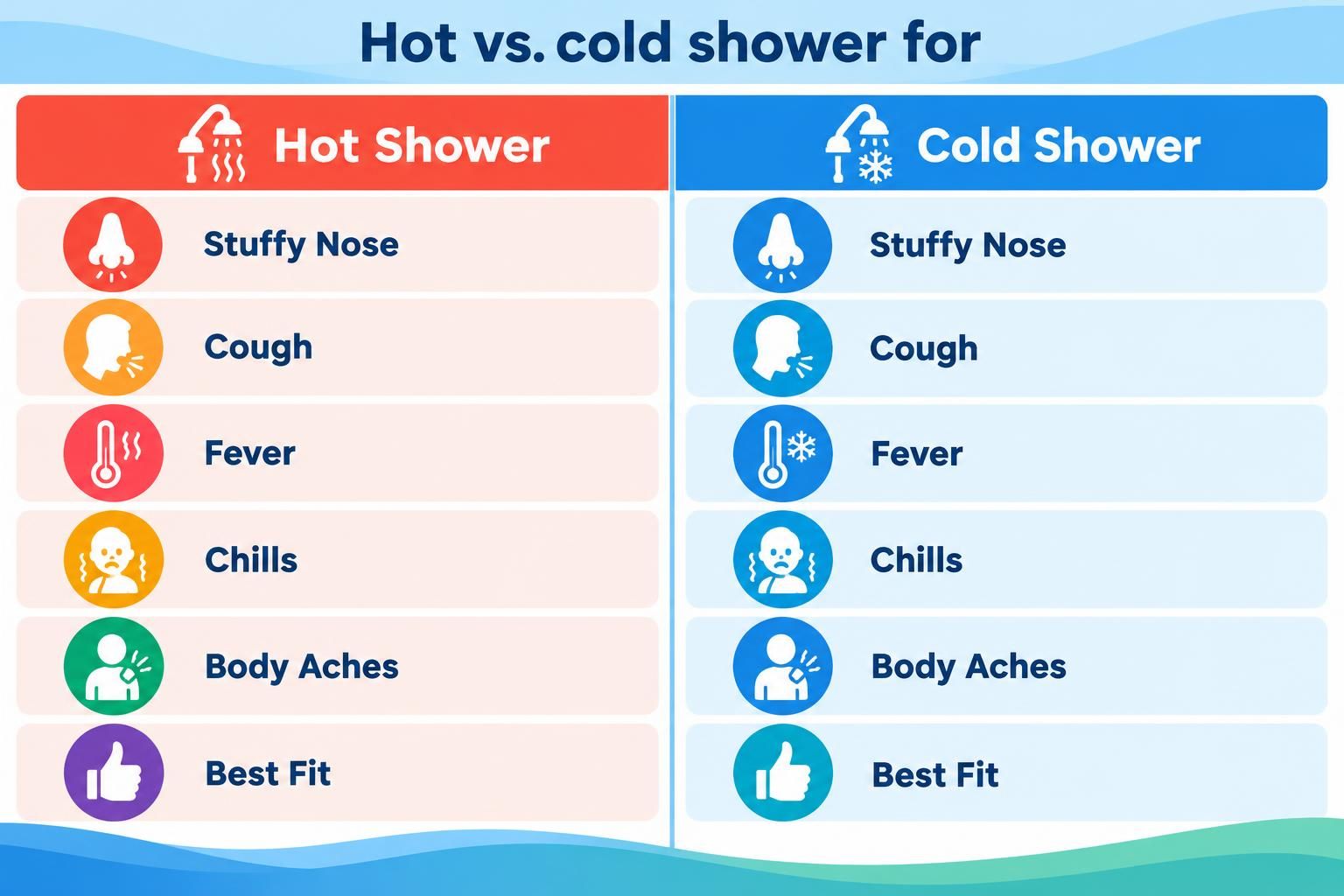
Stuffy Nose or Cough
If your main problem is nasal congestion, postnasal drip, or a cough from a common cold, a warm shower is the better pick. The steam acts a bit like gentle steam inhalation: it can moisten irritated airways and temporarily loosen mucus, so blowing your nose or coughing productively may feel easier afterward.
Think of someone who’s stuffed up at 10 p. m. and wondering whether a warm shower before bed is worth it. Yes, it often is for comfort, especially if dry indoor air is making the congestion feel thicker. Just keep expectations realistic: it may help you breathe easier for a short window, but it won’t shorten the cold or clear your sinuses permanently.
A cold shower is rarely useful for this scenario. It doesn’t loosen mucus in the same way, and if it makes you tense up or shiver, your cough may feel more irritating.
- Best choice: warm shower.
- Avoid: very hot water, which can dry your throat or make you lightheaded.
- Better add-ons: fluids, saline spray or rinse, humidified air, and rest.
Fever, Chills, and Body Aches
If you have fever, chills, and body aches, choose comfort over aggressively trying to cool yourself down. A lukewarm-to-warm shower may help sore muscles relax, but a cold shower can trigger shivering, which makes you feel worse and can work against heat loss.
So what if you have influenza-like symptoms and feel sweaty, achy, and exhausted? A quick rinse is fine if it feels restorative. But don’t force a shower just because you think it will break the fever. It won’t treat the infection, and it may drain energy you need for rest.
- Fever but not chilled: lukewarm shower if it feels comfortable.
- Active chills or shaking: skip the shower, bundle lightly, sip fluids, and rest.
- Body aches: warm water may soothe muscles for a while.
- Weak, dizzy, dehydrated, or unsteady: don’t shower alone, and consider skipping it.
For fever discomfort, acetaminophen or ibuprofen may help when appropriate for you, but follow the label and avoid ibuprofen if your clinician has told you not to use NSAIDs. If fever persists, breathing becomes difficult, or you feel unusually confused or faint, the shower question becomes secondary to getting medical advice.
How Warm Should the Water Be and How Long Should You Stay In?
Aim for comfortably warm water, not a “tough it out” hot shower. A good practical target is warm enough to create light steam and relax you, but not so hot that your skin turns bright red, you sweat heavily, or you feel lightheaded.
For most adults, 5 to 10 minutes is plenty; 10 to 15 minutes can be okay if you feel steady and the bathroom isn’t overly steamy. Longer, hotter showers can worsen dehydration risk, especially if you have fever, influenza-like fatigue, vomiting, diarrhea, or you haven’t been drinking much. A simple rule: drink a glass of water or an electrolyte drink after showering, then sit down for a few minutes before getting dressed if you felt weak beforehand.
- Too hot: flushing, dizziness, pounding heartbeat, weakness, or feeling worse afterward.
- About right: easier breathing for a short time, relaxed muscles, no shakiness.
- Too much effort: you need to sit down, feel unsteady, or dread standing that long.
Drink fluids afterward and rest; the shower is for comfort, not recovery speed.
When to Skip the Shower and Call a Doctor
Skip the shower if standing feels risky or your symptoms are moving beyond “miserable but manageable.” A shower can wait; breathing, hydration, and safety come first.
Call a doctor or seek urgent care if you have any of the following symptoms.
- Trouble breathing, wheezing that’s new or worsening, chest pain, or bluish lips.
- Fever that’s very high, lasts more than about 3 days, or comes back after improving.
- Fever with stiff neck, confusion, fainting, severe headache, or rash.
- Signs of dehydration: very dark urine, dizziness when standing, dry mouth, or you can’t keep fluids down.
- Flu-like symptoms with extreme weakness, especially if you’re older, pregnant, immunocompromised, or have heart or lung disease.
If you’re feverish and miserable despite fluids, rest, acetaminophen, or ibuprofen, don’t try to “fix” it with a hot or cold shower. Get medical guidance instead.
Other Remedies That Actually Help When You’re Sick
Changing the water temperature may make you more comfortable, but it will not shorten a cold or influenza. The basics help more than trying to “sweat it out” or shock yourself cold.
Useful add-ons:
- Drink fluids often, especially if you have fever, sweating, diarrhea, or poor appetite; dehydration can worsen dizziness and fatigue.
- Rest more than you think you need. A warm shower before bed may help you settle, but sleep does more.
- Use saline spray or rinse for nasal congestion, and consider a humidifier if your room air is dry.
- Try honey for cough if you’re an adult or a child over 1 year old.
- Use acetaminophen or ibuprofen as directed for fever and body aches, if they’re safe for you.
For most colds, congestion, coughs, and body aches, a short warm shower is the safer, more useful choice because it can ease discomfort without adding stress to your body. Keep water comfortably warm and the shower brief. Skip it if you’re weak, dizzy, chilled, dehydrated, or dealing with flu-like fatigue. If you have trouble breathing, chest pain, confusion, worsening dehydration, or a severe or persistent fever, get medical advice.